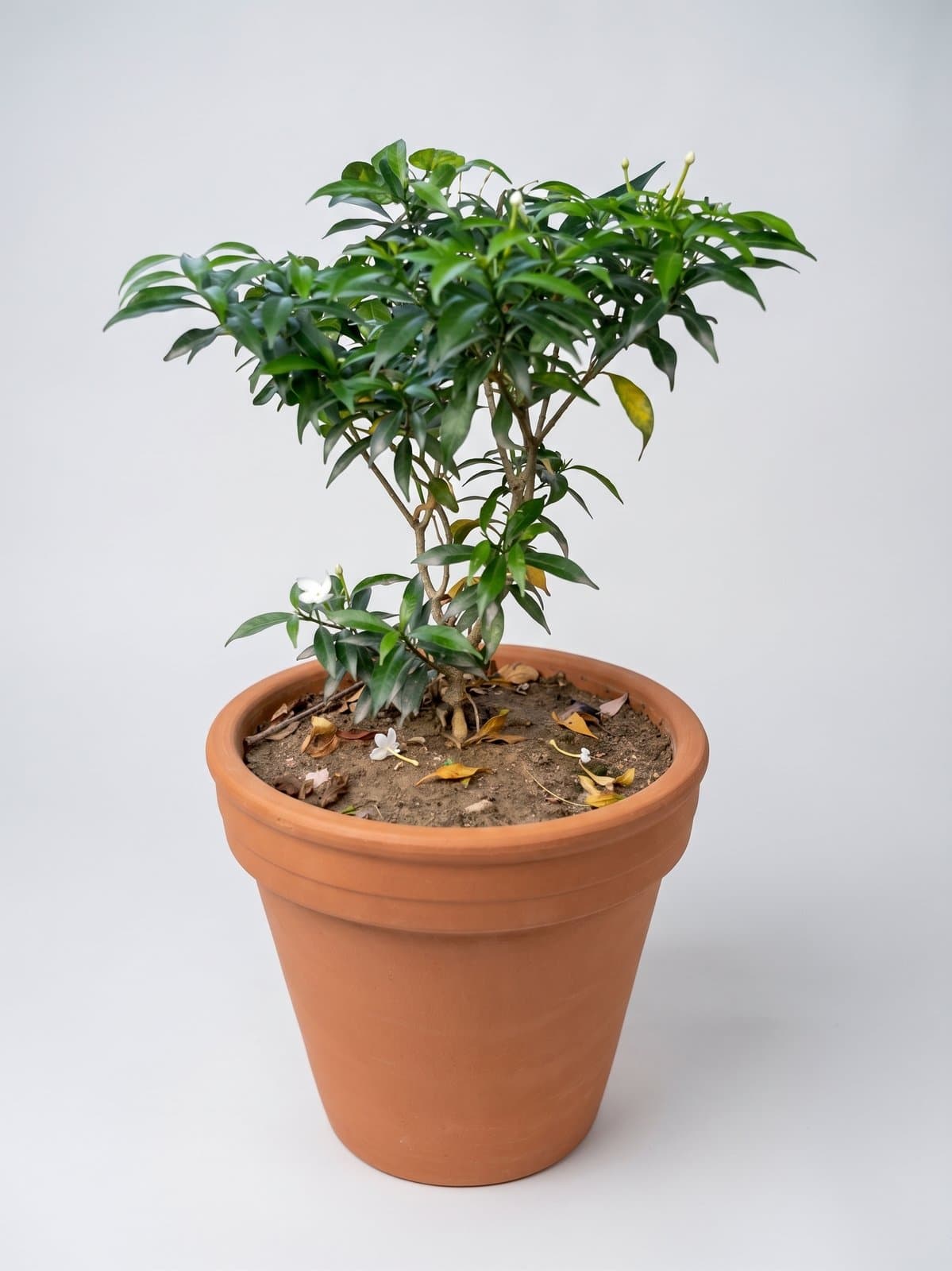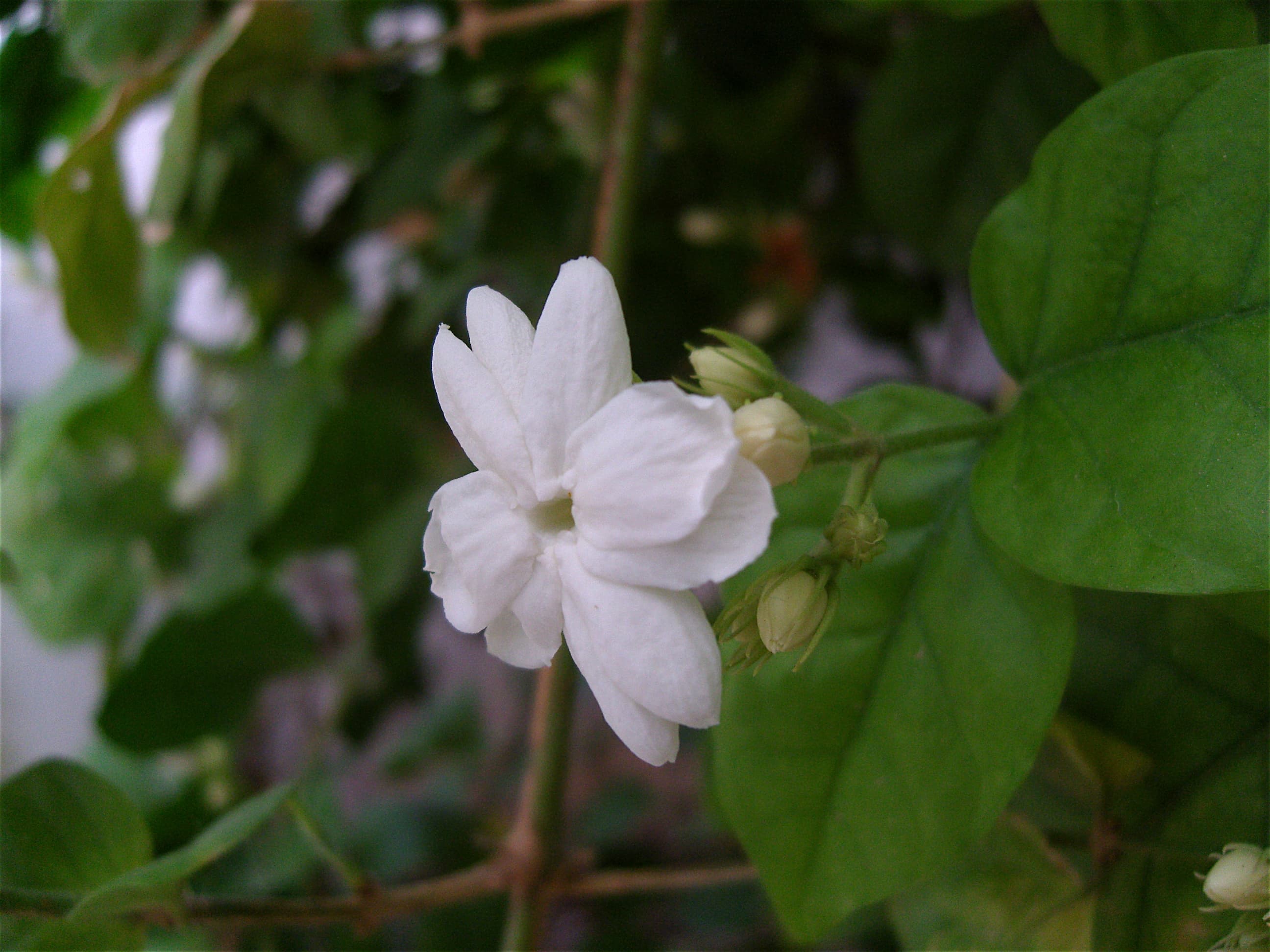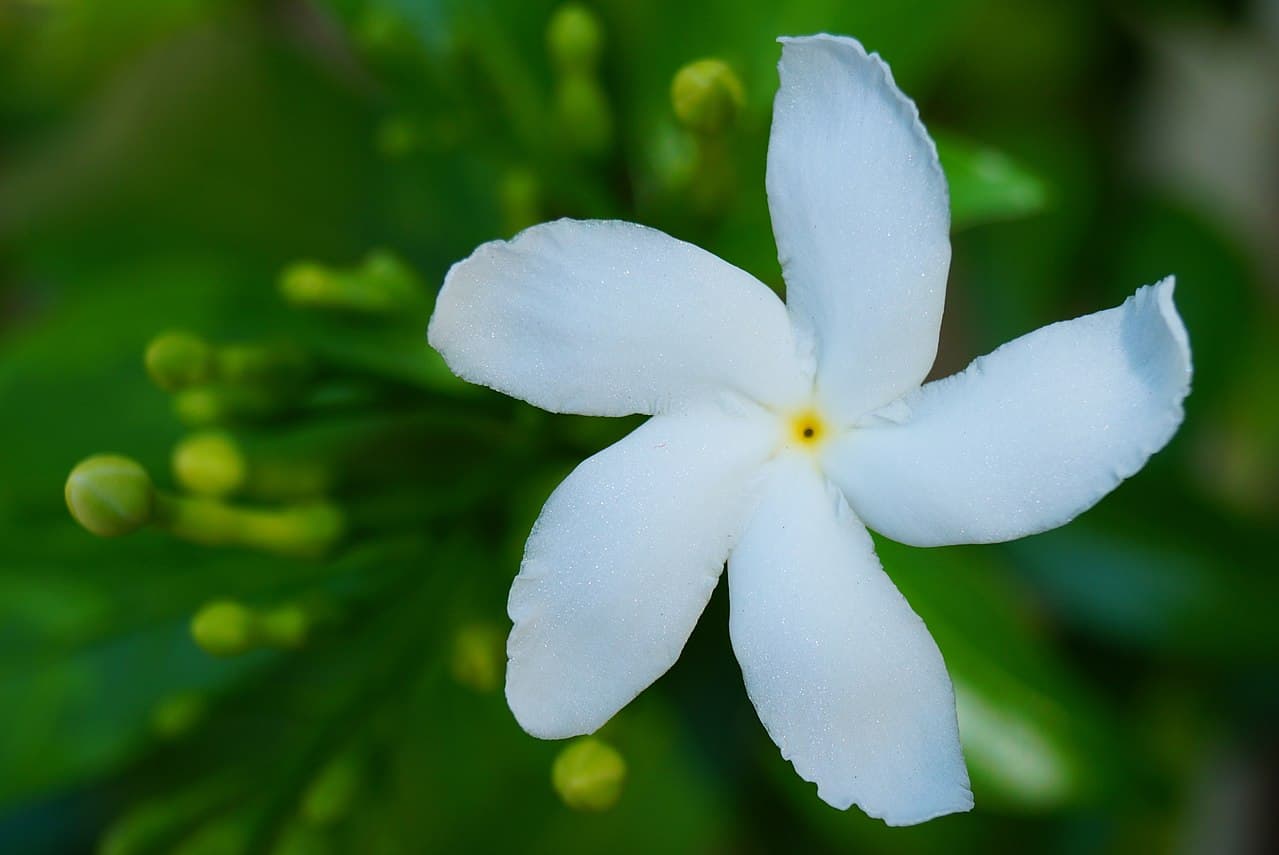
The chandni plant (crape jasmine, Tabernaemontana divaricata) is one of the easiest flowering shrubs you can grow in Lahore. It keeps its glossy dark-green leaves all year and carries clean white pinwheel flowers from spring, through the monsoon and into autumn, resting only in the coldest weeks of winter. The name means moonlight, and at dusk the white flowers do seem to glow.
We grow chandni on our own farm in Jallo More and suggest it to first-time gardeners without a second thought. It forgives the odd missed watering, takes pruning well and asks for little once it has settled. Here is what it needs through a Lahore year.
What chandni is, and why it isn't a true jasmine
Chandni is an evergreen shrub from South and Southeast Asia, grown all over Pakistan and India. The single form has five petals twisted like a little pinwheel. The double form, often sold as 'Flore Pleno', has frilly petals like crinkled crepe paper, which is where the name crape jasmine comes from. The scent is light and sweet, strongest in the evening and easy to miss in the heat of the day, so think of it as a bonus rather than the main event. If fragrance is the whole point, see our guide to fragrant plants for Pakistani homes.
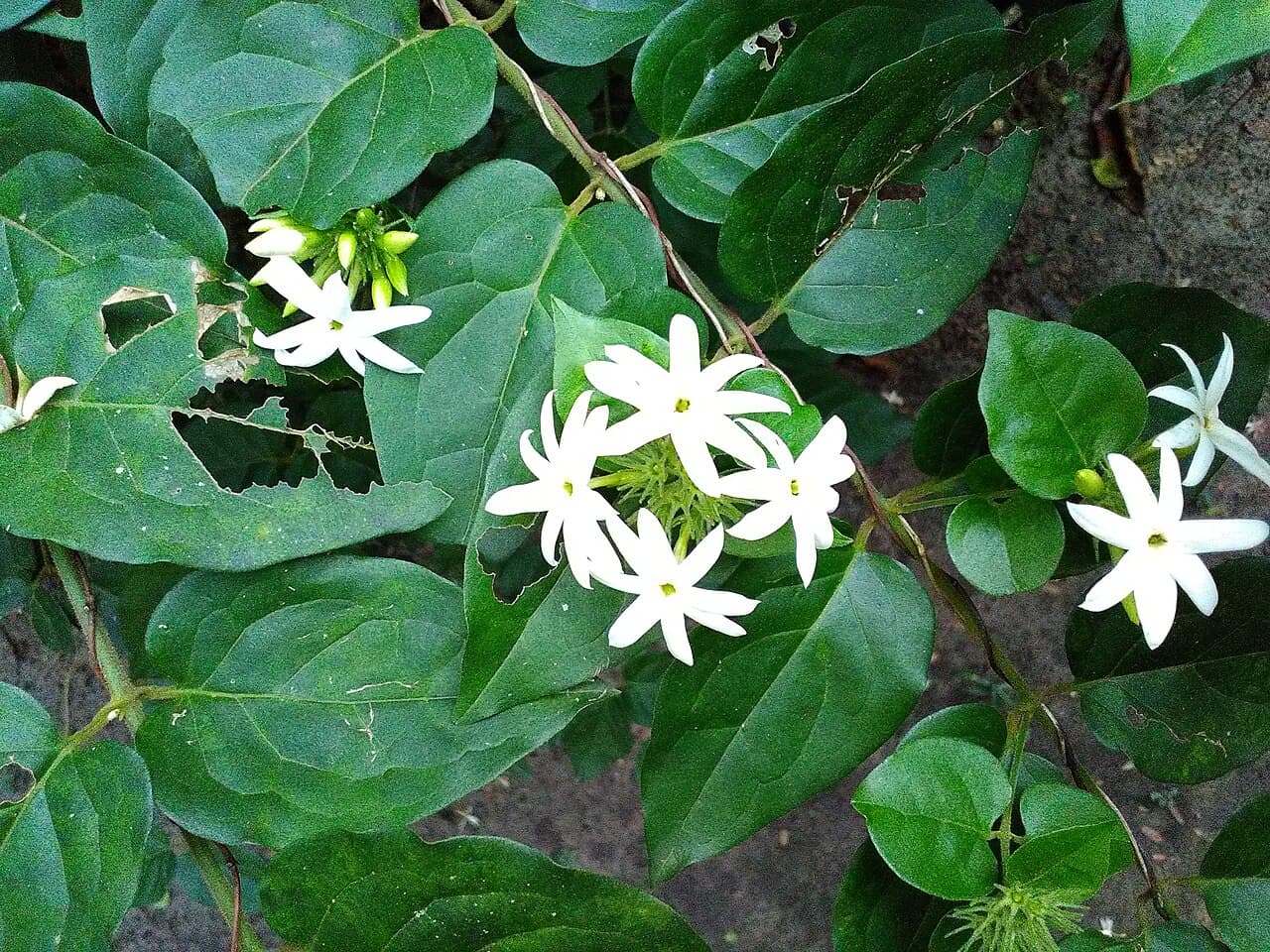
Despite the name, it isn't a jasmine at all. True jasmines like motia belong to the olive family, while chandni is in the dogbane family (Apocynaceae) with kaner (oleander), and like many of its relatives it bleeds milky sap from a broken leaf. For the strong gajra scent you want motia. To choose between the white-flowered favourites, read our motia, chambeli, raat ki rani and chandni comparison.
Where to plant it: shrub, hedge or pot
- As a single shrub by the gate, under a window or in a corner of the lawn, where the white flowers catch the eye in the evening.
- As an informal hedge along a boundary wall, planted 2 to 3 feet apart and trimmed lightly. It makes a soft, flowering screen rather than a hard, boxy one. See our guide to flowering shrubs and hedges for Lahore for good companions.
- In a large pot on a veranda, terrace or balcony, where a little pruning keeps it compact.
Plant in February–April, or in September–October after the monsoon, so the roots settle before the summer heat or the winter cold.
Chandni plant care through Lahore's seasons
Light. Full sun to light shade; four to six hours of direct sun is the sweet spot. On a balcony that bakes in May and June, morning sun with some afternoon shade is ideal. In deep shade it stays green but flowers poorly.
Water. Keep the soil evenly moist but never soggy:
- May–June: pots usually need water daily, early morning or evening; plants in the ground want a deep soak two or three times a week.
- Monsoon (July–September): water only when the top inch of soil is dry, and make sure pots drain after heavy rain.
- Winter (December–January): cut back to about once every five to seven days for pots.
Winter cold. Chandni is a tropical shrub and dislikes frost. Established plants in the ground usually come through a Lahore winter with, at worst, a few scorched leaves; young plants and pots are more exposed. On the coldest December and January nights, move pots against a sunny wall or under the veranda, and cover small plants in the ground with a light cloth when frost is forecast. Flowering slows or stops in the cold and picks up again in March.
Soil, pots and feeding
Any fertile, free-draining soil will do. For pots, mix garden soil, well-rotted compost or cow-dung manure and a little river sand. Start a young plant in a 10 to 12-inch pot and move it up to 16 to 18 inches as it grows, always with a drainage hole; our guide to choosing the right gamla helps with size and material. From March to October, add a handful of compost every month or so, or a balanced flowering-plant fertiliser every four to six weeks. Stop feeding in winter while the plant rests.
Pruning, and new plants from cuttings
Chandni takes trimming very well. After each big flush of flowers, cut the longest shoots back by a few inches, just above a pair of leaves; every cut sends out two or three new shoots, and more shoots mean more flowers. Do the main shaping in late February or March, and avoid hard pruning from November to January, when fresh growth would be hit by the cold.
Cuttings root easily:
- In the warm, humid months (the monsoon is ideal), cut a 4 to 6-inch piece from a healthy stem that isn't flowering.
- Strip the lower leaves, keeping two or three at the top. Wear gloves or wash your hands afterwards, as the sap can irritate skin.
- Set it in a small pot of moist, sandy mix in bright shade. Roots usually form in three to four weeks.
Pests, problems and a safety note
- Mealybugs: white cottony clumps in the leaf joints. Dab them with cotton dipped in surgical spirit, or spray neem oil weekly.
- Whitefly: tiny white insects that fly up when you brush the plant, leaving the leaves sticky and pale. Spray neem oil or mild soapy water under the leaves.
- Big green caterpillars in the monsoon: these are oleander hawk moth larvae, the same ones that eat kaner. Pick them off by hand.
- Yellow leaves usually mean too much water or a blocked drainage hole, so let the soil dry a little. One or two old lower leaves yellowing is normal.
- Few flowers almost always means too much shade; move it somewhere sunnier.
Safety: chandni has milky sap and contains alkaloids, so it is not something to eat. Chewed leaves can give a dog or cat mouth irritation, drooling or vomiting, and a child an upset stomach; the sap can also irritate sensitive skin. Nothing to panic about: keep pots away from toddlers and chewing pets, wash your hands after pruning, and if you think a child or pet has swallowed some, call your doctor or vet. Our pet-safe plants guide has gentler choices for homes with a puppy or kitten.
Common questions
Is chandni the same as motia or jasmine?
No. Motia (Jasminum sambac) is a true jasmine with a far stronger scent, and it is the one used for gajras. Chandni belongs to a different family and has milky sap.
Does chandni have a fragrance?
Yes, a light, sweet one. It is strongest in the evening and at night, so plant chandni near where you sit after sunset.
Does chandni flower in winter?
Very little. In Lahore it flowers most from spring to autumn, slows down or stops in December and January, and starts again as the weather warms in March.
Can I grow chandni in a pot on a balcony?
Yes. Use a pot of at least 12 inches with a drainage hole, give it four to six hours of sun and water it daily in the peak of summer.
How big does a chandni plant get?
Left unpruned it can reach 5 to 8 feet with a similar spread, but a trim after each flush keeps it at 3 to 5 feet. In a pot it usually stays around 3 to 4 feet.
We grow chandni on our own farm in Jallo More, Lahore. Chandni (Crape Jasmine) is Rs 250 a plant: pick it up at the farm, or we deliver anywhere in Lahore. To reserve one, or to ask what is in flower this week, message us on WhatsApp, or browse all our plants first.
Photo: SKsiddhartthan, CC BY-SA 4.0, via Wikimedia Commons.