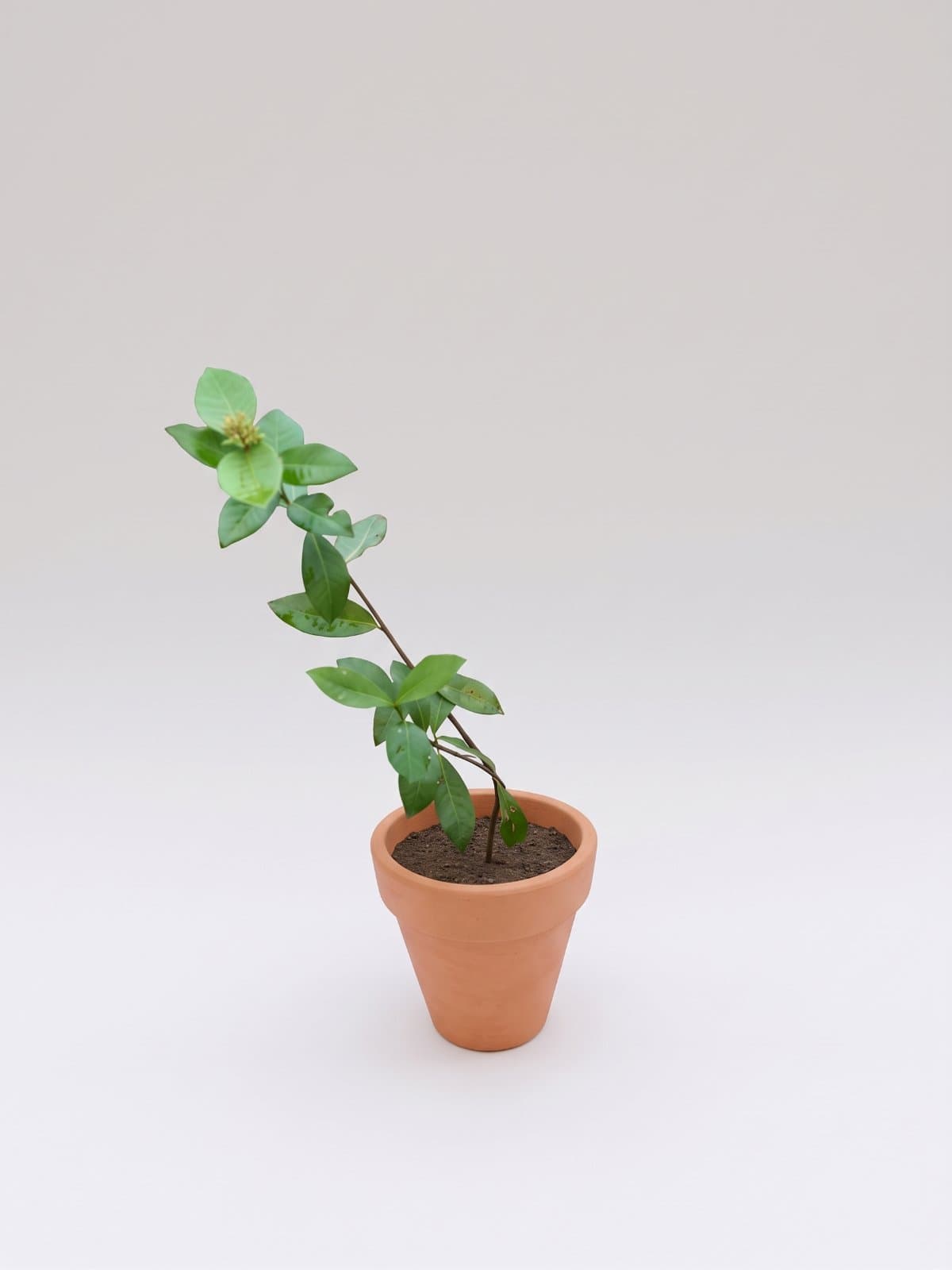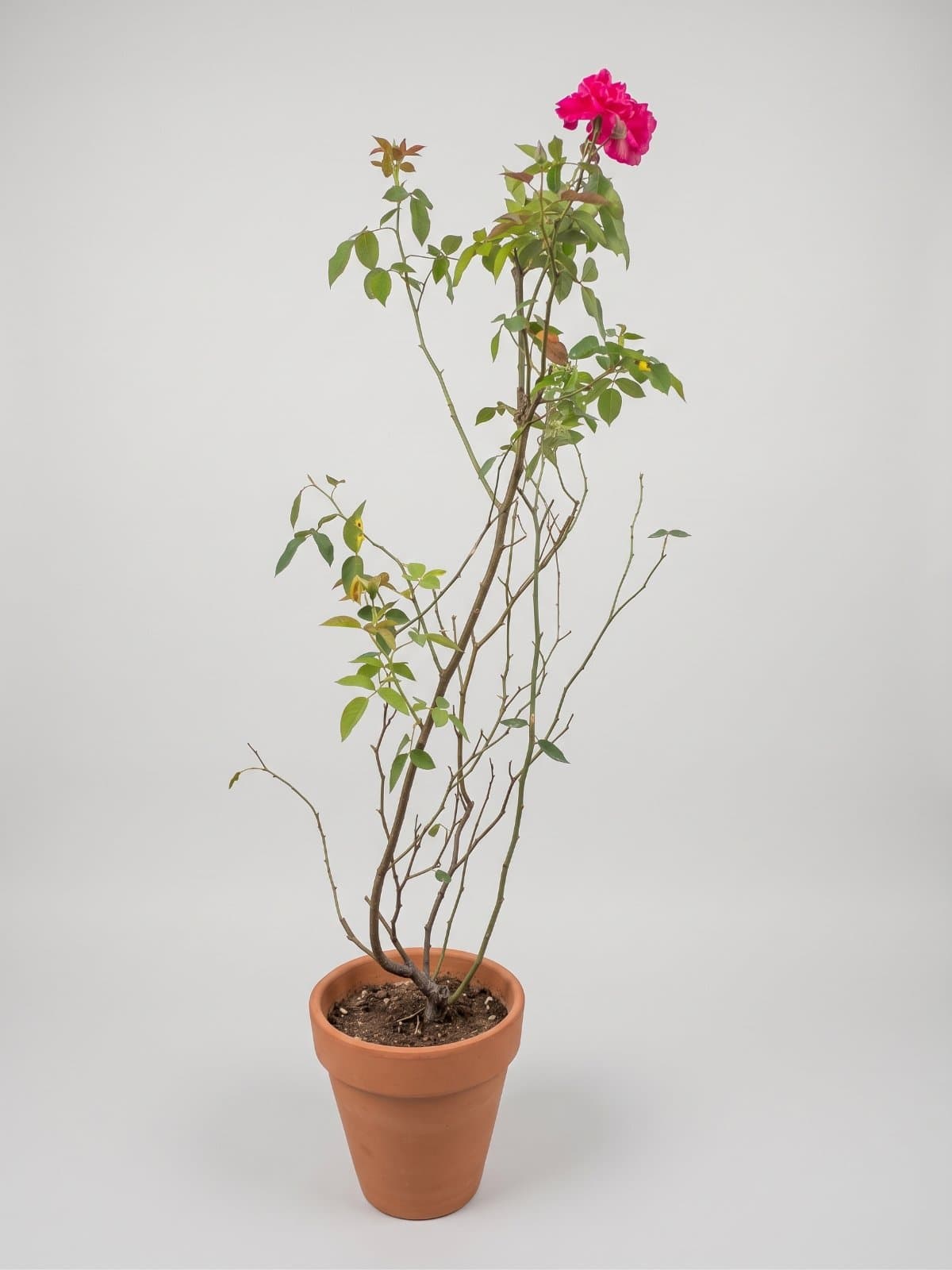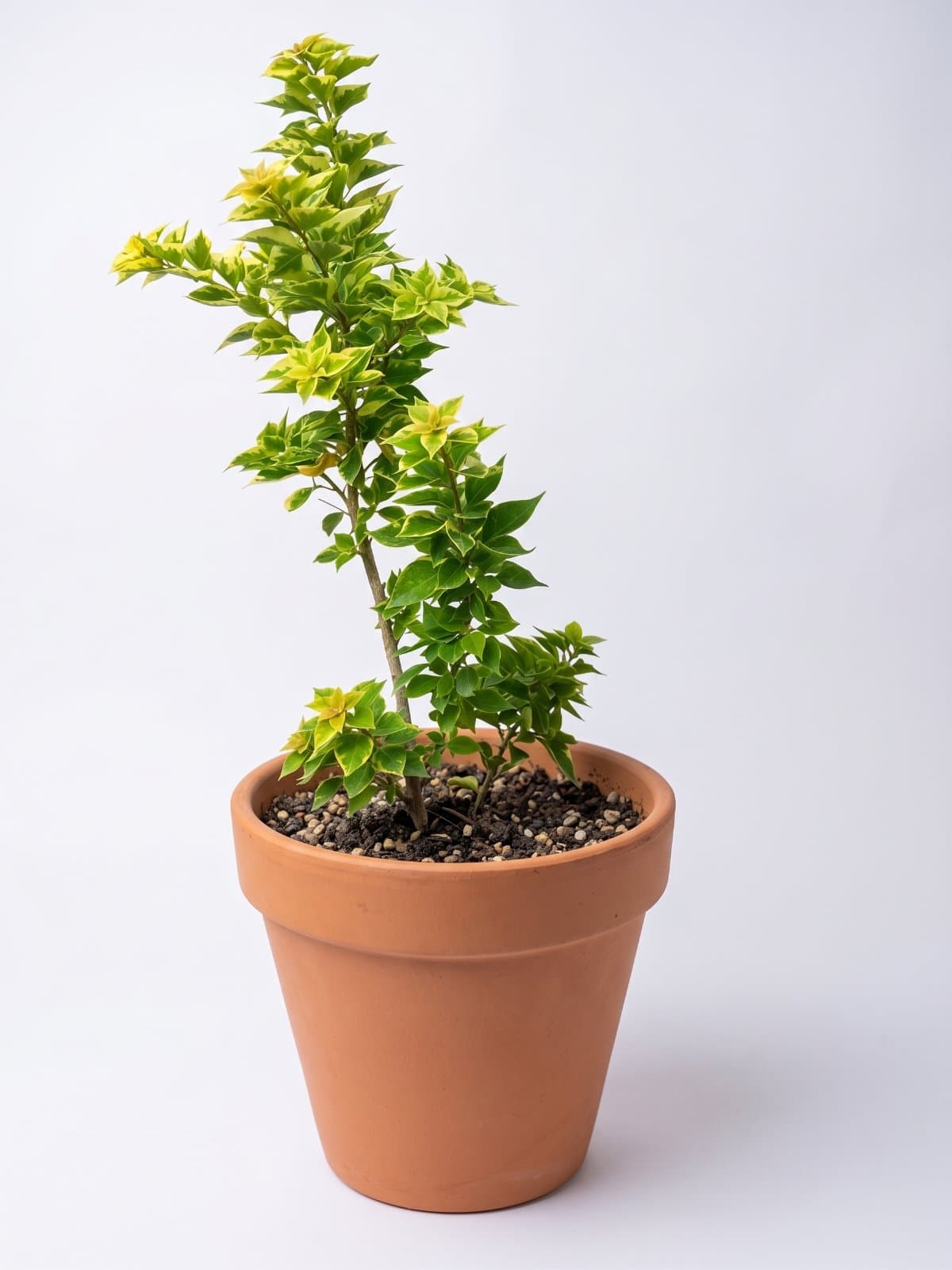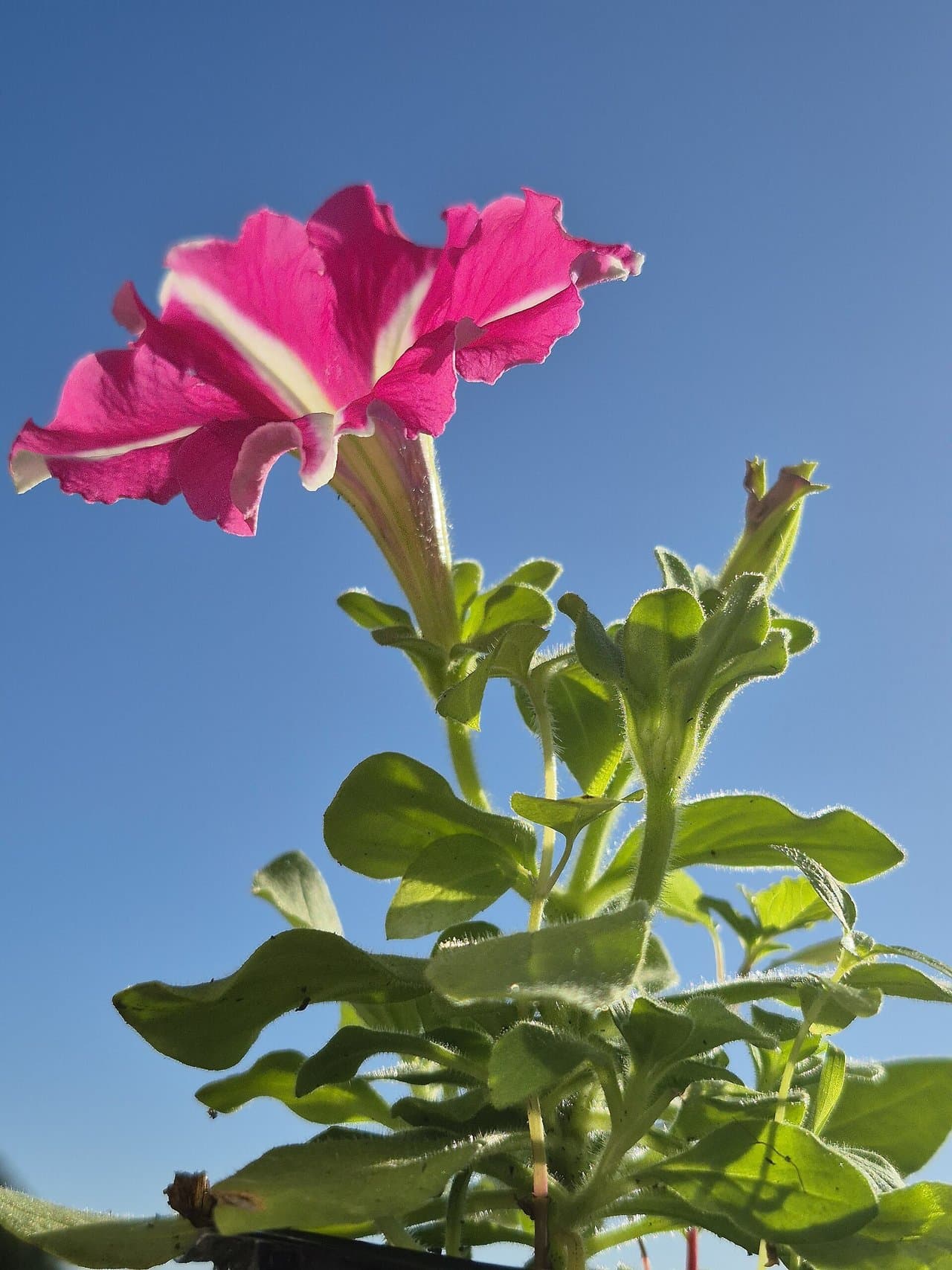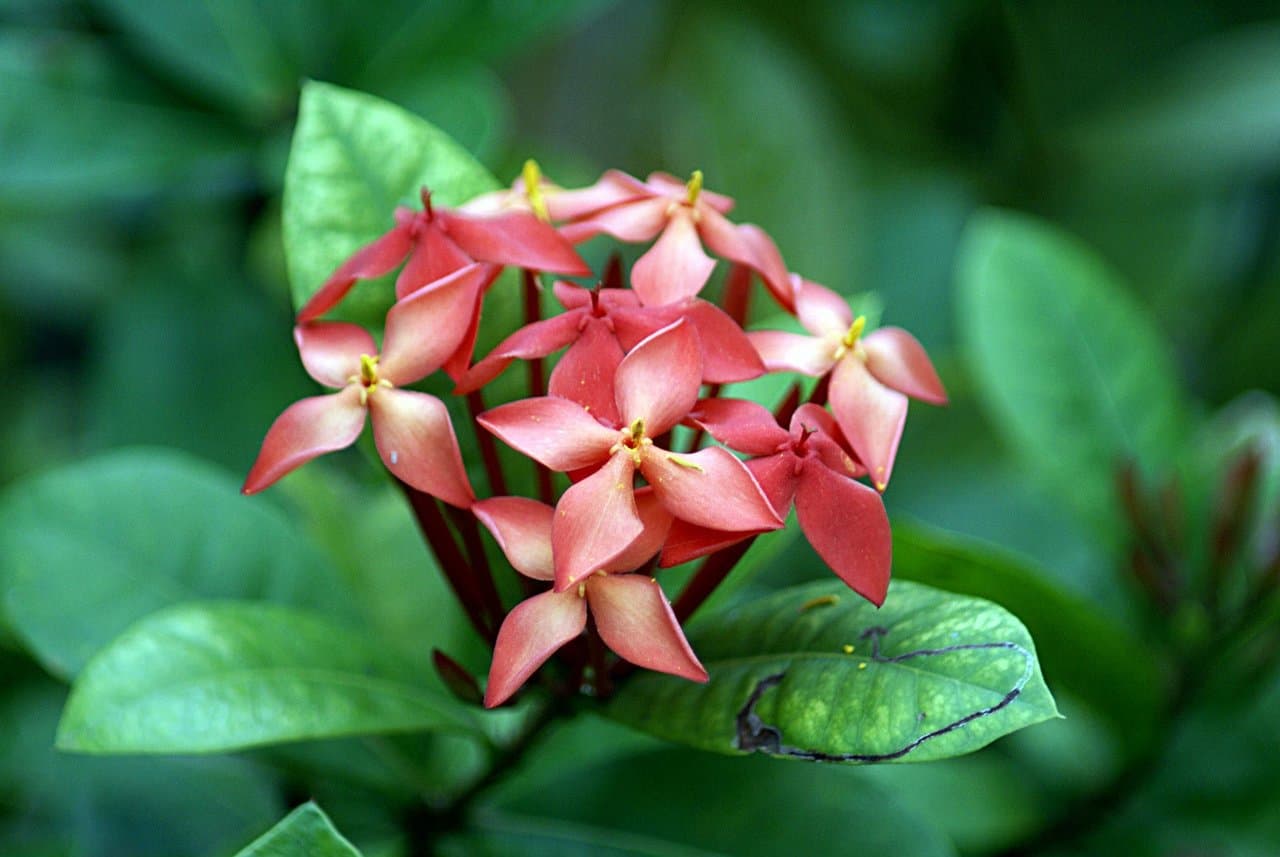
The ixora (Ixora coccinea), often called jungle geranium or flame of the woods, is a compact evergreen shrub that carries dense, rounded clusters of small tubular flowers — usually fiery red or orange, sometimes pink or yellow — right through the warm months. For a Lahore gardener it is a gift: it genuinely loves our heat and blazing sun, stays neat and bushy, and rewards a sunny bed, border or large pot with colour for months on end. It can even be clipped into a low flowering hedge. The one thing it asks in return is the right soil — and that is where most people here go wrong, so we will spend proper time on it below.
Full sun for the best flowers
Ixora flowers on sunshine. Give it the most open, sun-drenched spot you have — at least five to six hours of direct sun a day — and it will bloom generously from spring right through the hot months and into autumn. In shade it survives but sulks: leggy growth, sparse leaves and very few flower heads. On a rooftop, in a border along a boundary wall, or in a big pot on a bright terrace, it is perfectly happy in full Lahore sun once it has settled in.
Soil — and the yellow-leaf problem in our alkaline ground
This is the make-or-break section for ixora in Punjab. The plant is naturally an acid-lover — it wants a rich, well-drained soil on the acidic side (roughly pH 5.5 to 6.5). Most Lahore garden soil and our tap water are the opposite: hard and alkaline. In alkaline ground the plant cannot take up iron even when iron is present, and the classic sign appears — new leaves turn pale yellow while the veins stay green (interveinal chlorosis). Left alone, the plant looks sickly and stops flowering well.
The fix is simple once you know it:
- Dig in plenty of well-rotted compost, leaf mould or old cow manure at planting time, and mulch every year — organic matter gently acidifies the soil and feeds the roots.
- When leaves yellow, apply chelated iron (iron sequestrene / Fe-EDDHA) as a soil drench or a foliar spray; a seaweed-plus-iron leaf tonic greens it up fast.
- For a longer-term cure, work a little elemental sulphur into the soil to bring the pH down, and keep the plant away from lime- or cement-splashed spots near new walls.
- In a pot you sidestep the problem entirely — fill it with a good acidic potting mix and you control the soil completely.
Watering and feeding for months of bloom
Keep the soil evenly moist but never waterlogged. In the fierce heat of May and June that may mean watering most days, especially for pots; in cool winter cut right back. Good drainage matters — soggy roots rot, and any pot must have a drainage hole.
To keep the flowers coming, feed through the growing season (spring to early autumn) with a flowering feed — one higher in potassium and lower in nitrogen, so you get blooms rather than just leaves. A rose or flowering-plant fertiliser is ideal, every three to four weeks. Ease off feeding in winter while the plant rests.
Pruning, shaping and growing it as a hedge
Ixora stays naturally rounded and needs little pruning, but a light trim keeps it tidy and bushy. Pinch or snip the shoot tips after a flush of flowers fades — this encourages branching and more flower heads on the fresh growth. Because it blooms on new wood, gentle shaping is fine, but avoid hard, repeated shearing, which cuts off the very shoots that would have flowered. Planted a foot or so apart, ixora makes a lovely low, informal flowering hedge or border edging that many Lahore gardeners use along paths and boundaries.
Winter protection and common pests
Ixora is a tropical plant and does not enjoy real cold. Lahore winters are mild enough that an established plant in a sheltered, sunny spot usually comes through fine, but a hard frost on the coldest January nights can scorch the leaves or knock the top growth back. Protect young plants — keep pots against a warm wall or under cover, and mulch the roots. Even if frost nips the tips, it usually shoots again from the base in spring.
Watch for sap-sucking pests, especially in warm, still weather: aphids on soft new tips, plus scale, mealybugs and spider mites. A sticky black sooty mould on the leaves is a sign of scale or aphids hiding underneath. Wash the plant down, then spray with neem oil or a mild soapy solution, repeating weekly until it clears.
Common questions
Will ixora survive the Lahore summer?
Yes — it thrives in it. Ixora is a heat-loving tropical shrub, and our long, hot summer is exactly when it flowers best. Just keep it watered through the extreme heat and give it full sun.
Why are my ixora's leaves turning yellow?
Almost always our alkaline soil and water locking up iron. Feed it well-rotted compost, apply chelated iron (iron sequestrene) or a seaweed-iron foliar spray, and over time lower the soil pH with a little sulphur. Growing it in a pot of acidic mix avoids the problem altogether.
Can ixora be grown in a pot?
Absolutely, and in our alkaline areas a pot is often the easiest way to keep a healthy one, because you control the soil. Use a large pot with drainage holes and an acidic potting mix, keep it in full sun, and feed it through the warm months.
What colours does ixora come in?
The classic is bright red, but it also comes in orange, pink, yellow and coral shades. Red and orange are the easiest to find here. Tell us what colour you would like and we will try to source it.
If you want a shrub that pours out colour all summer, ixora is hard to beat. We keep ixora plants at the farm and can help you pick a healthy, well-rooted one — message us on WhatsApp, tell us your colour and whether it is for a bed or a pot, and we will try to arrange it. For more sun-loving colour, see our guide to seasonal flowers for Pakistani gardens, and if you are just starting out, our beginner's guide to gardening in Pakistan.