Motia vs chambeli is one of the questions we hear most often at the farm, and raat ki rani and chandni usually join the conversation too. All four have white, fragrant flowers, and in everyday speech they all get called "jasmine" or "chambeli". But they are four different plants from three different plant families, and each one behaves very differently in a Lahore home.
Here is how to tell them apart, when each smells strongest, how big each grows and where it fits, so you don't bring home a big climber when you wanted a balcony pot.
Motia vs chambeli: the short answer
Motia and chambeli are both true jasmines (genus Jasminum), but they are different species with a different shape of plant.
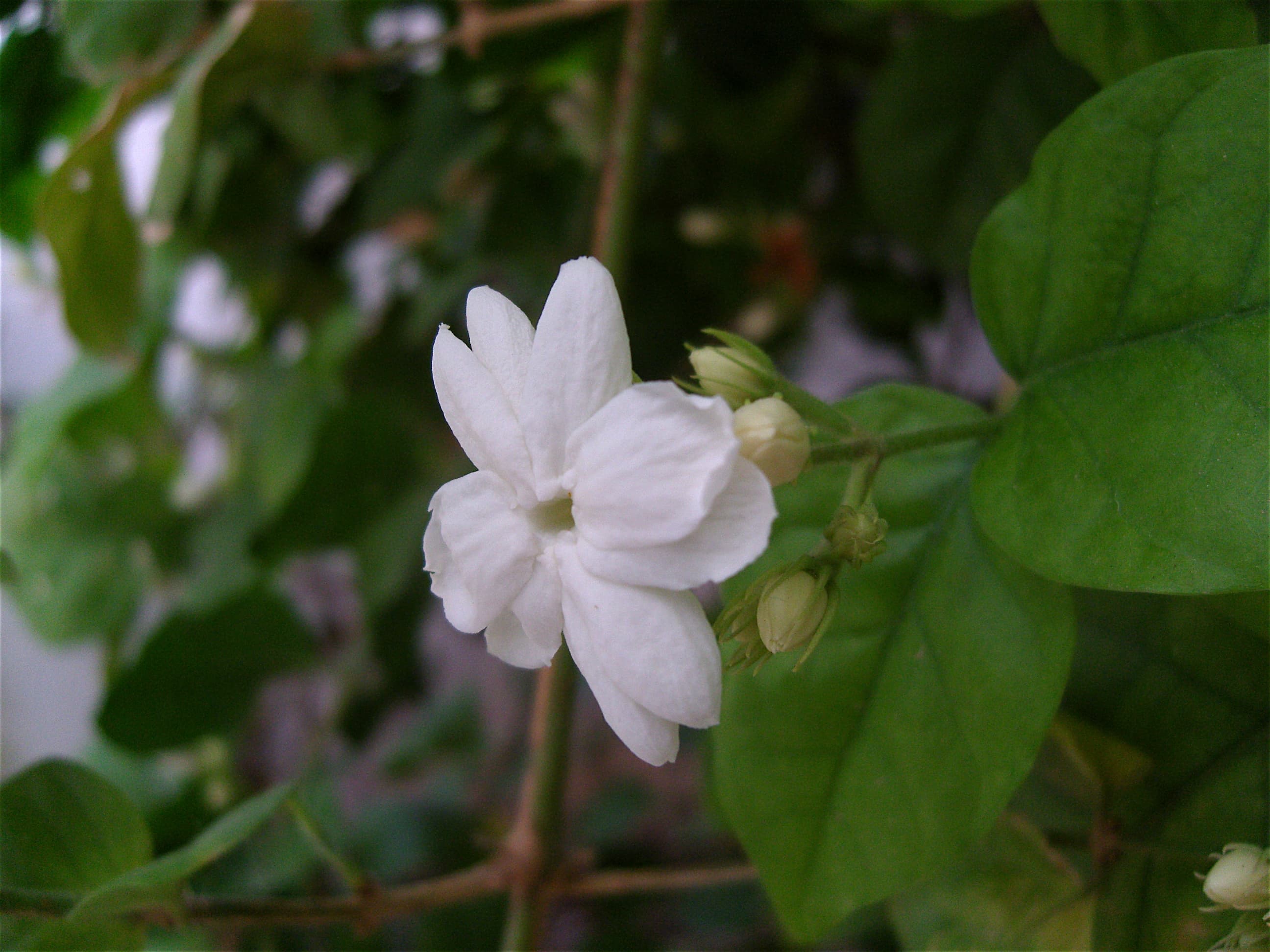
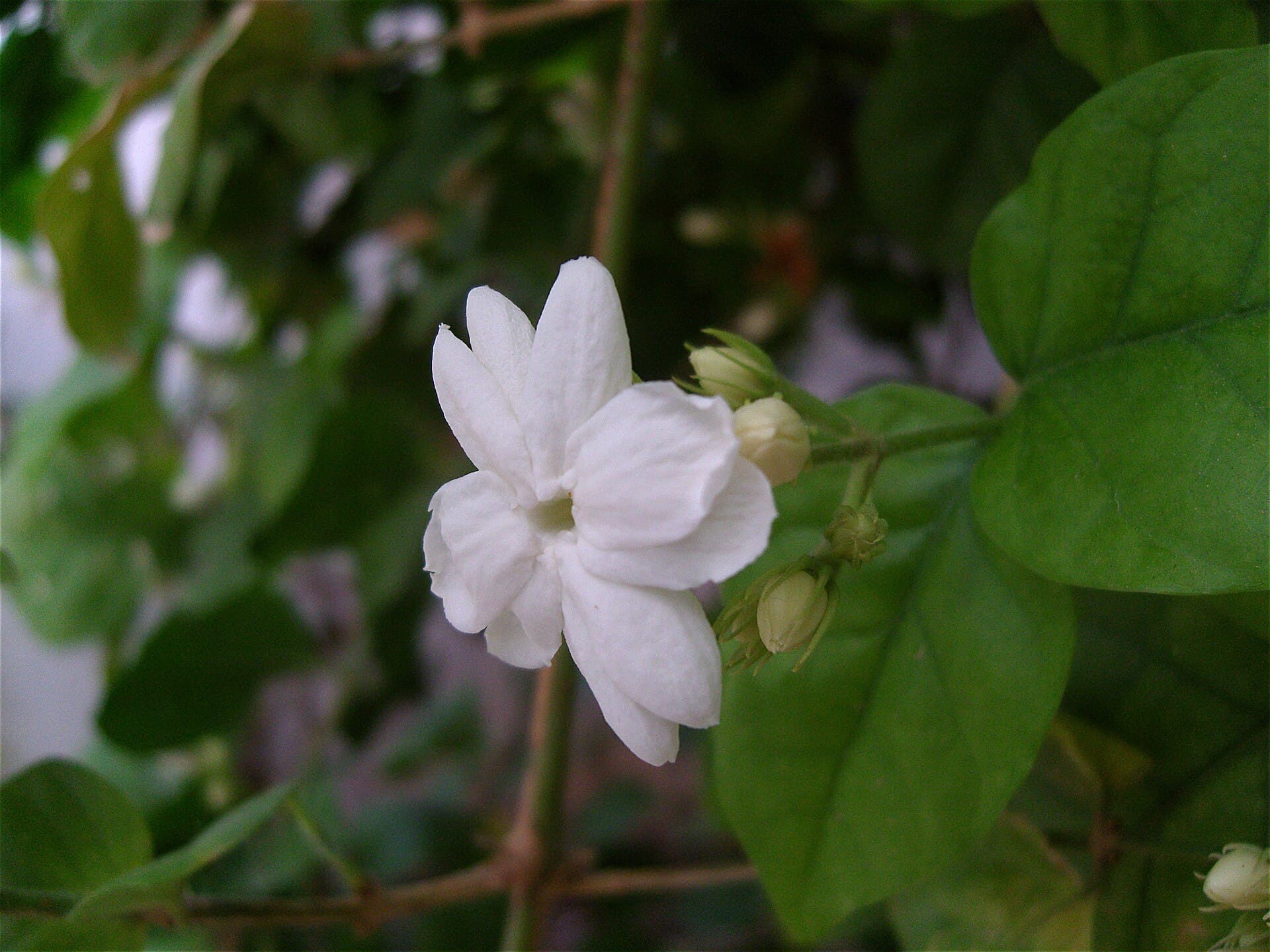
- Motia (Jasminum sambac, Arabian jasmine) is a bushy shrub with plain, glossy, oval leaves and small, waxy flowers that open from round, pearl-like buds. It is the gajra and garland flower.
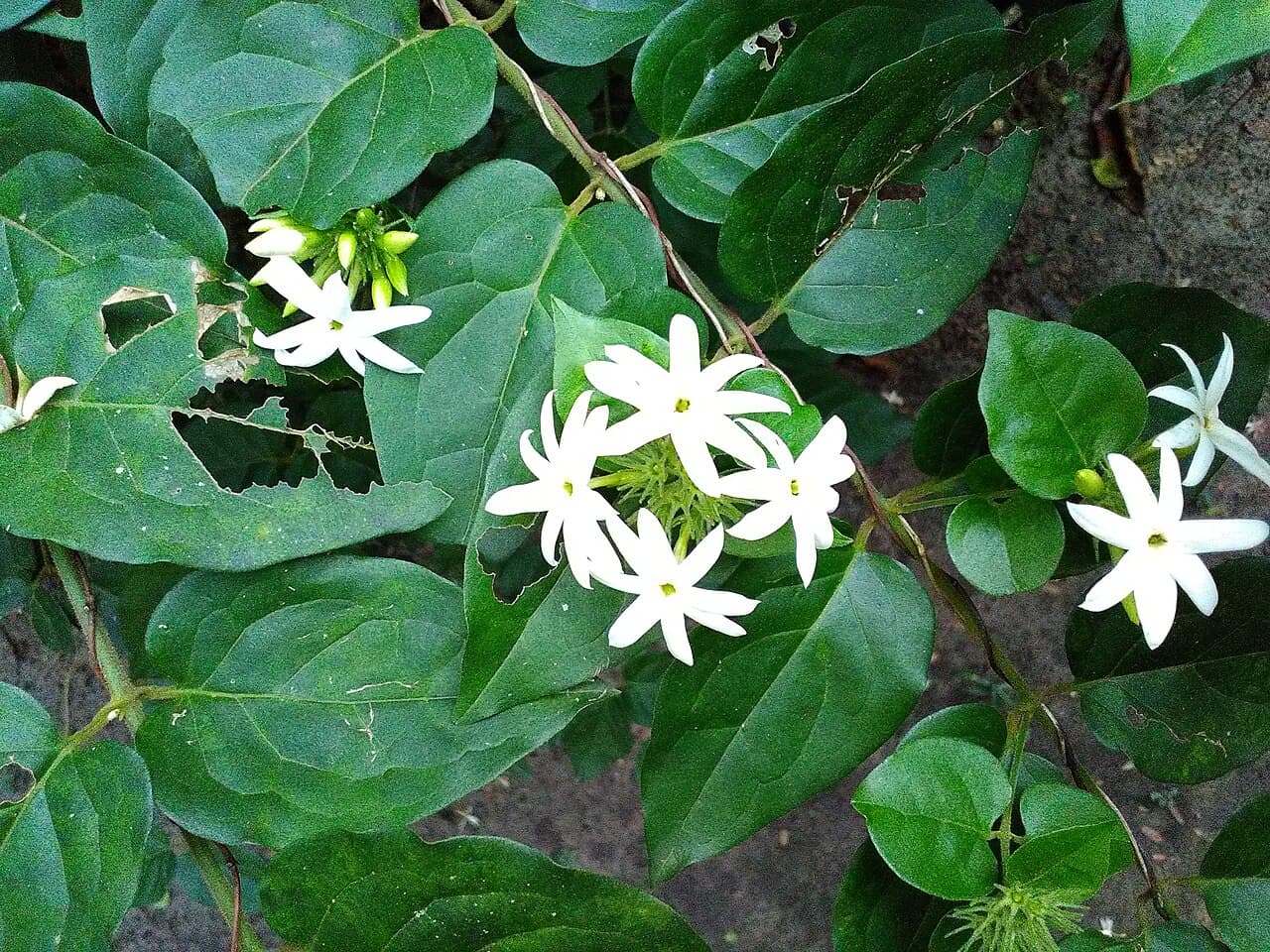
- Chambeli (usually Jasminum grandiflorum, or its close cousin Jasminum officinale) is a climber that twines up a support. Each leaf is split into a row of small leaflets, and the flowers are flat, five-petalled stars, often pink-tinged on the outside of the bud.
The quickest test is the leaf: one plain oval leaf means motia, a row of little leaflets means chambeli. The confusion is mostly a naming habit: many people call any white jasmine "chambeli", but strictly speaking, chambeli is the climber.
As for the national flower: Pakistan's national flower is jasmine, and most reference sources name Jasminum officinale, the chambeli climber, rather than motia, though you will see motia named in some places too. Motia, as it happens, is the national flower of the Philippines.
The two look-alikes: raat ki rani and chandni
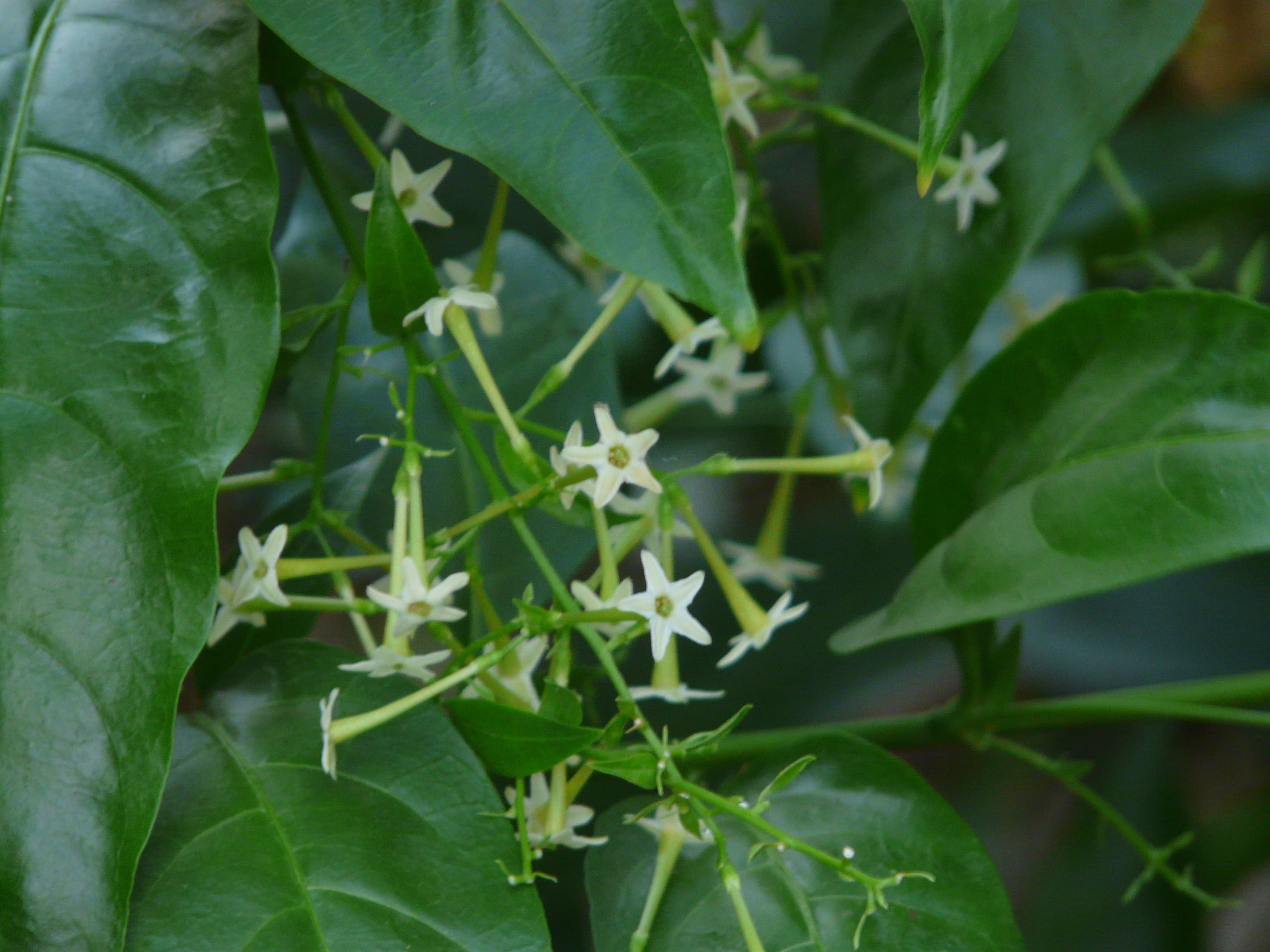
Raat ki rani (Cestrum nocturnum, night-blooming jasmine) is not a jasmine at all but a member of the nightshade family, alongside tomatoes, potatoes and brinjal. It grows into a loose shrub two to three metres tall, with bunches of tiny greenish-white tubular flowers you hardly notice by day. After dark it gives off the most powerful scent of the four, strong enough to carry down a street. Our raat ki rani guide covers its care.
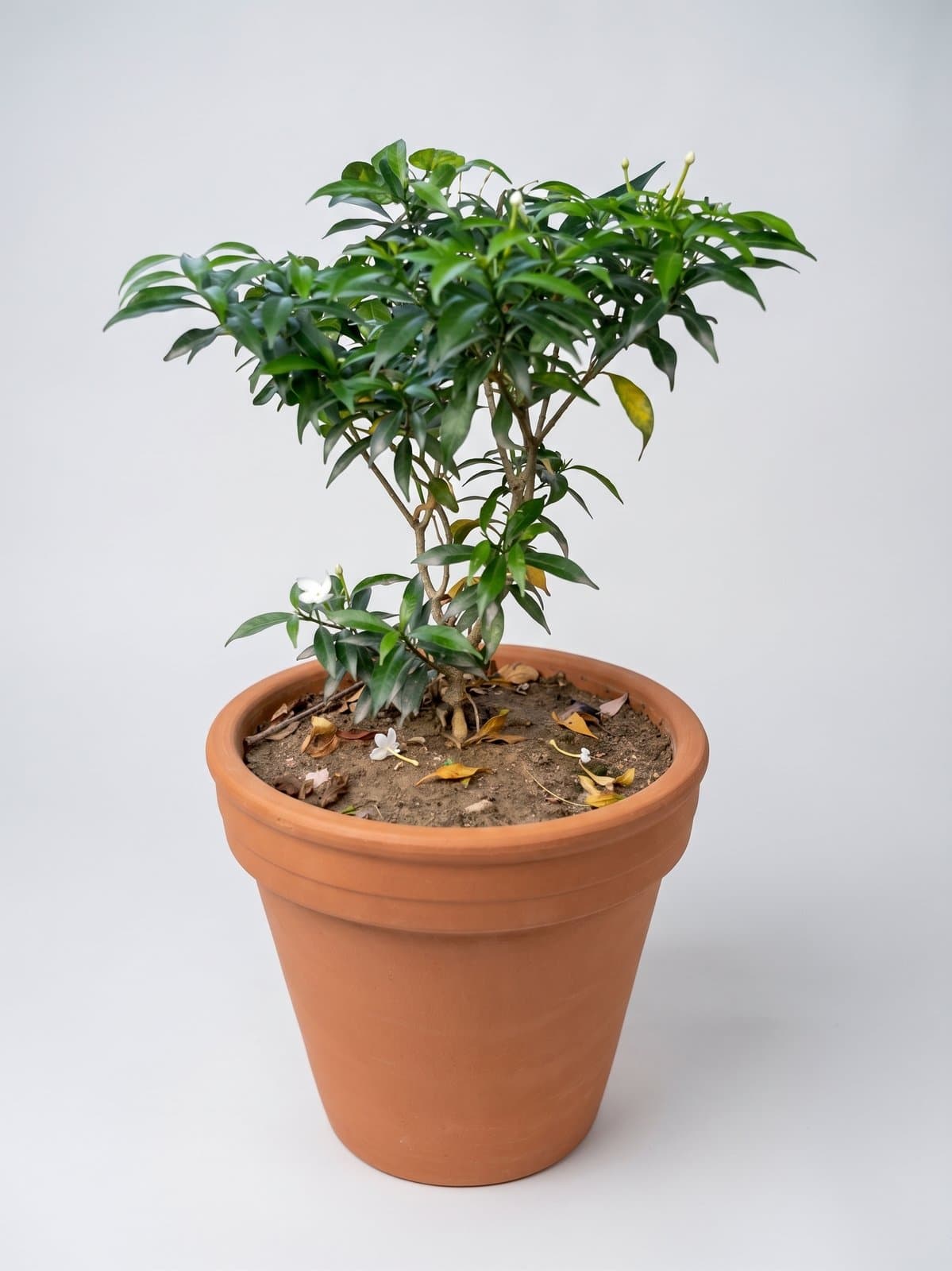
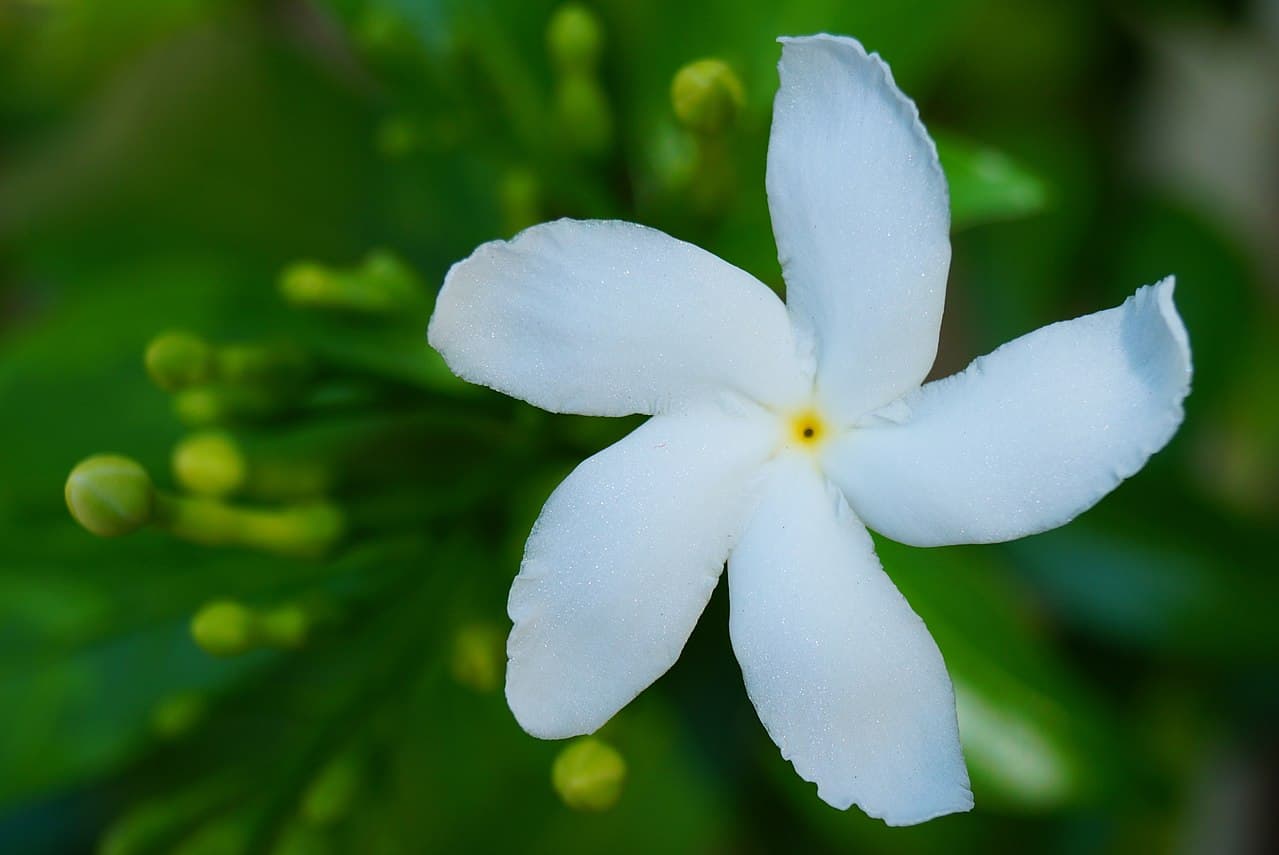
Chandni (Tabernaemontana divaricata, crape jasmine) is not a true jasmine either. It is in the oleander family, a cousin of kaner, and the giveaway is its sap: snap a leaf and a milky white latex runs out, which a true jasmine never does. It makes a neat, rounded evergreen shrub with large glossy leaves, and its white petals twist like a paper pinwheel, in single or double forms. The scent is soft and sweet, mostly in the evening. Our chandni care guide covers it in full.
At a glance: the four compared
- True jasmine? Motia and chambeli, yes. Raat ki rani (nightshade family) and chandni (oleander family), no.
- Flowers: motia small (2–3 cm), waxy, single or rose-like double; chambeli flat open stars of about 3–4 cm; raat ki rani tiny greenish-white tubes in bunches; chandni pinwheels of about 4 cm, single or double.
- Scent: raat ki rani is the strongest by far, but only at night; motia comes next, richest from dusk into the night; chambeli is sweet but lighter, mostly in the evening; chandni is the gentlest, also mainly in the evening.
- Habit and size: motia is a bushy shrub, easily kept around a metre in a pot; chambeli is a twining climber that reaches three metres or more on a support; raat ki rani is a loose shrub of two to three metres; chandni is a dense, rounded shrub of about 1.5–2 metres.
- Flowering in Lahore: motia from spring into autumn, heaviest through the summer and monsoon; chambeli in the warm months, thinning out in winter; raat ki rani in repeated warm-season flushes; chandni for most of the year, slowing only in December and January.
- Sun: motia needs full sun, five to six hours or more; chambeli and raat ki rani like full sun to light shade; chandni manages with four to six hours, so it handles a partly shaded spot best.
Which one should you plant?
- A small balcony or a pot by the door: motia. It stays compact, flowers well in a good-sized pot, and one plant can scent a whole balcony. Our guide to growing motia has the full care routine.
- A boundary wall, gate or pergola: chambeli to cover a frame or railing with flowers; raat ki rani for a big shrub and a strong night scent by the gate; chandni for a tidy evergreen border that flowers for months.
- Outside a bedroom window: chandni or motia, both sweet without being overpowering. Keep raat ki rani a few metres away: its night scent is heavy enough to give some people a headache.
- Flowers for most of the year: chandni. Motia and chambeli are warm-season flowerers.
- Flowers for gajras: motia, no contest. Pick the plump white buds in the afternoon and they open to full scent by evening.
To mix them for scent across the seasons, see our guide to fragrant plants for Pakistani homes.
A calm word on safety
Two of the four need a little care around children and pets. Raat ki rani is toxic in all its parts, especially its small white berries, so plant it where small children and pets cannot chew it, and pick off any berries within reach. Chandni's milky sap is mildly toxic if chewed and can irritate skin and eyes, so wash your hands after pruning. Motia and chambeli, as true jasmines, are generally listed as non-toxic to cats and dogs.
Common questions
Is motia the same as chambeli?
No. Both are true jasmines, but motia (Jasminum sambac) is a bushy shrub with small waxy flowers, while chambeli (Jasminum grandiflorum or J. officinale) is a climber with divided leaves and flat, starry flowers.
Which is Pakistan's national flower?
Jasmine. Most reference sources identify it as Jasminum officinale, the chambeli climber, rather than motia, although you will find motia named in some places too.
Which one smells the strongest?
Raat ki rani, by a long way, but only after dark. Of the plants you would happily sit right beside, motia has the richest scent; chambeli is sweet but lighter, and chandni is the gentlest.
Which one flowers in winter or most of the year?
Chandni. In Lahore it flowers for most of the year and only slows down in the coldest weeks. Motia, chambeli and raat ki rani are warm-season plants that rest through winter.
Can I grow motia in a pot?
Yes, and it is one of the best fragrant plants for a pot. Use a pot with a good drainage hole, a free-draining mix with some compost, and your sunniest spot: five to six hours of direct sun keeps the buds coming.
Of these four, motia and chandni are the two we grow on our own farm: Motia (Arabian Jasmine) at Rs 250 and Chandni (Crape Jasmine) at Rs 250, a good pair for summer-evening scent and flowers through most of the year. Just message us on WhatsApp to reserve yours, then pick up at our farm in Jallo More, Lahore, or get delivery anywhere in Lahore. You can also browse all our plants.
Photo: Sooraj Maruthanattu, CC BY-SA 4.0, via Wikimedia Commons.