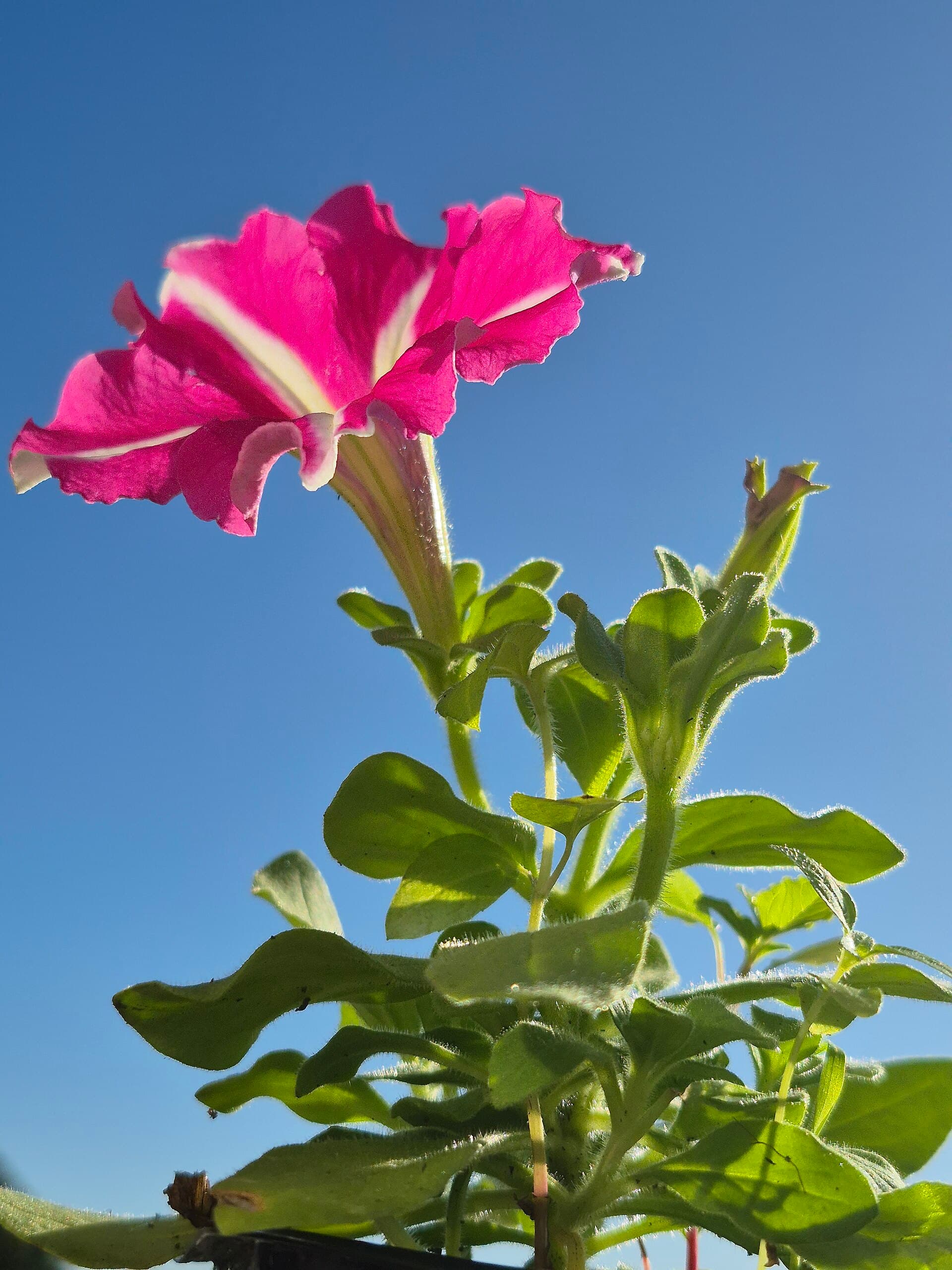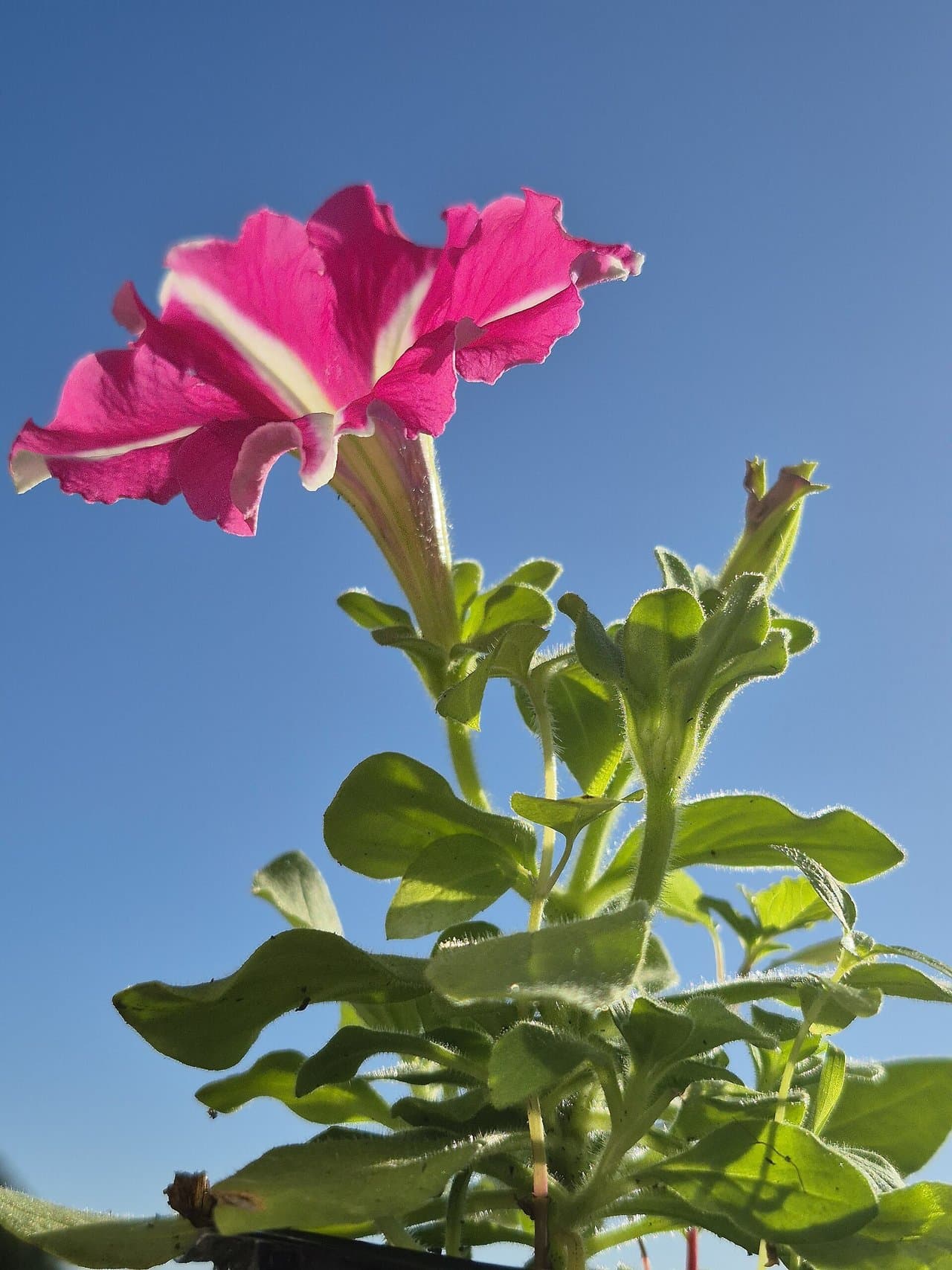
Petunia is the go-to cool-season bedding flower for Pakistani gardeners — a low, spreading plant that throws out masses of bright, trumpet-shaped blooms in almost every colour, from deep purple and magenta to pink, red and white. From October onwards you see it everywhere in Lahore: spilling out of hanging baskets, edging front borders and filling rows of pots by the gate. Give it sun, a well-drained pot and a little regular care and it will flower non-stop from winter into spring.
It is an annual here, not a permanent plant — it lives for one cool season and then the summer heat finishes it off. But for those few months it is one of the most rewarding splashes of colour you can grow, and a packet of cheap seed or a tray of nursery seedlings goes a long way.
When to sow and transplant in Lahore
Timing is everything with petunia, because it loves cool weather and hates heat. In the Lahore plains the season runs like this:
- Late August to September: sow seed in trays or a shaded nursery bed while the days are still warm. The seed is dust-fine, so scatter it on the surface, press it in gently and mist — never bury it, which is the single most common reason petunia seed fails.
- Late October to November: transplant the young seedlings into their final pots or beds as the nights turn cool. This is the most important window.
- December to March: the plants bulk up and flower right through our mild winter and into spring.
Seed germinates in about one to two weeks. If you miss the sowing window, simply buy ready seedlings from a nursery in October or November and skip straight to transplanting — that is what most home gardeners do.
Sun, soil and the right pot
Petunia wants full sun — five to six hours a day at least. Our gentle winter light is perfect; a spot that would scorch a plant in June suits it now. In shade you get leggy growth and few flowers.
Give it loose, well-drained soil enriched with compost or old manure. Soggy soil rots the roots, so drainage matters more than anything. Petunia has shallow roots and does beautifully in containers — a hanging basket of cascading (spreading) types by a balcony, or a row of pots along a wall, gives the most colour for the least ground. If you are unsure what size container to use, our guide to choosing the right pot (gamla) walks you through it, and petunia is a natural for a rooftop or balcony garden.
Watering and feeding
- Keep the soil lightly moist. Petunia likes regular water but not waterlogging; in cool weather water when the top of the soil dries, and check pots and baskets more often as they dry faster.
- Water the base, not the flowers. Wetting the blooms overhead in cool, damp weather invites rot and grey mould.
- Feed to keep it flowering. All those blooms are hungry work. A balanced liquid feed every couple of weeks keeps the colour coming, and a high-potash (bloom) feed is even better once flowering starts.
Deadhead and pinch for months of bloom
Two simple habits separate a tired, straggly petunia from a mound of non-stop colour:
- Pinch when young. When a seedling is a few inches tall, pinch out the growing tip. It feels harsh, but it makes the plant branch and grow bushy instead of running to one long, thin stem.
- Deadhead as flowers fade. Snip or pinch off each spent bloom along with the little seed pod behind it. Left alone the plant puts its energy into seed and stops flowering; deadheaded regularly it keeps throwing new buds for months.
By mid-season a plant that has grown leggy can be cut back by a third to freshen it — it will re-sprout and flower again within a couple of weeks.
When summer ends the season
As the heat builds in April and May the plant tires, flowering slows and it eventually gives up — that is normal, not a failure of care. Pull it out then and use the pot for a summer flower. While it is growing, watch for a few things:
- Aphids cluster on soft new tips; wash them off with a jet of water or a mild soap spray.
- Budworm (a small caterpillar) eats holes in buds and flowers — pick them off by hand in the evening.
- Legginess and few flowers almost always mean too little sun, too much nitrogen feed, or no deadheading. Fix all three.
One reassuring note for families: petunia is not toxic to cats or dogs, so it is a safe choice for a home with pets and children.
Common questions
Will petunia survive the Lahore summer?
No — it is a cool-season annual. It flowers beautifully from winter into spring, but once the real heat arrives in April and May it fades and dies. Enjoy it as a seasonal plant and replant fresh each autumn.
Can I grow petunia in a hanging basket or pot?
Yes, it is one of the best container flowers there is. Spreading (cascading) types are made for hanging baskets; upright types suit pots and borders. Both need full sun and good drainage.
Do you sell petunia plants, and what do they cost?
Petunia is a cheap seasonal flower — a packet of seed or a tray of seedlings from a nursery costs very little. We do not always keep it in stock, but message us and we will try to arrange seed or seedlings for you in the autumn planting season.
Why is my petunia not flowering?
Usually too little sun, too much leafy (nitrogen) feed, or no deadheading. Move it into full sun, switch to a bloom feed, and pinch off spent flowers to trigger fresh buds.
Petunia is a wonderful seasonal filler, but for permanent colour and scent that returns year after year, pair it with something lasting. We keep healthy red rose plants and fragrant motia (Arabian jasmine) at the farm, and if you want petunia seed or seedlings for the winter season just message us on WhatsApp and we will try to arrange them. For more cool-season ideas, see our guides to winter flowers for Pakistani gardens, seasonal flowers in Pakistan and growing marigold (genda).