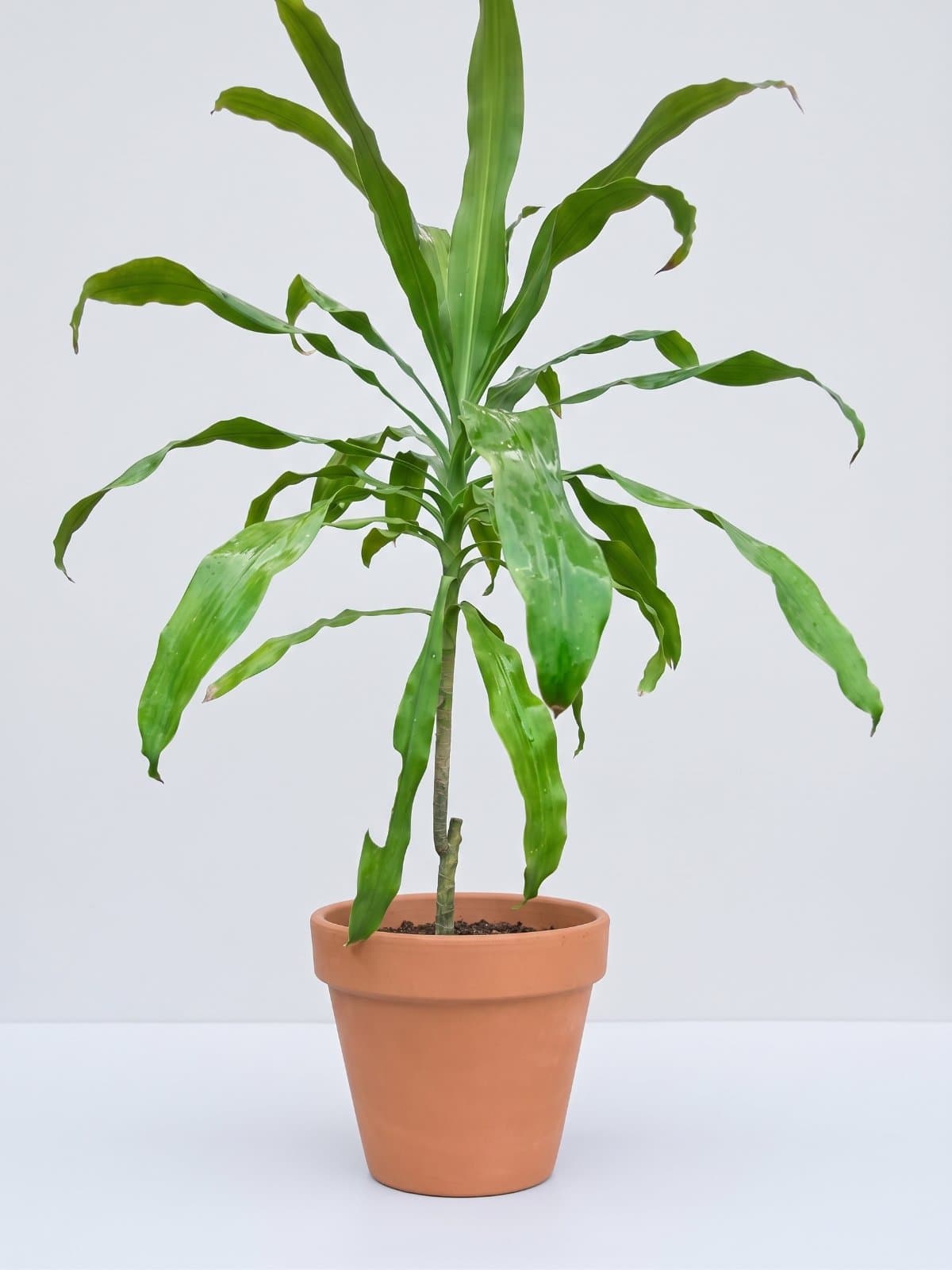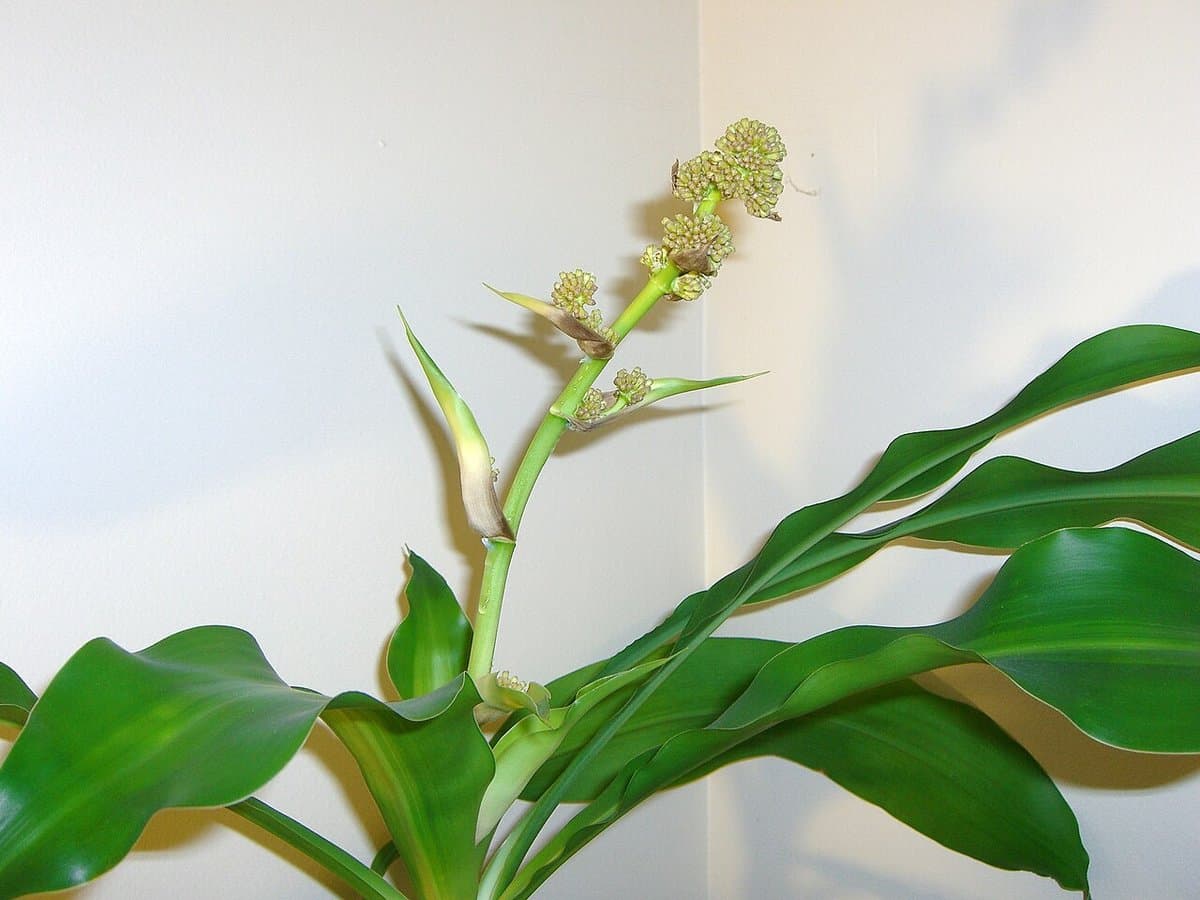
The corn plant (Dracaena fragrans) is one of the easiest indoor trees you can grow in a Lahore home — an upright, slow-growing plant whose long, arching leaves look just like the leaves of a corn stalk, striped down the middle with a soft band of yellow-green. It stands on a woody cane, reaches a comfortable indoor height without taking over the room, and shrugs off the low light and dry, air-conditioned air that kill fussier plants. That is exactly why you see it in so many offices, waiting rooms and living-room corners. Here is how to keep yours healthy.
Light — bright shade is perfect, and it copes in a dim corner
The corn plant does best in bright, indirect light — a spot near a window that gets plenty of daylight but no harsh midday sun falling straight on the leaves. Direct Lahore summer sun through glass will scorch and bleach those leaves, so keep it a step back from a hot south- or west-facing window. Its real gift is tolerance: it will keep going in a fairly dim corner or an interior office away from any window, only growing more slowly and losing a little of the yellow stripe. This shade tolerance, plus its happiness in cool air-conditioned rooms, makes it one of the best plants for an office desk or a shaded indoor spot.
Watering — let the top dry, and mind the tap water
Overwatering is the quickest way to lose a corn plant, so let the soil surface dry out before you water again. Push a finger in: when the top 2–3 cm feel dry, give it a thorough drink and let every drop drain away — never leave the pot standing in a saucer of water. In our hot months that may mean watering roughly once a week; through the cool, low-light winter the plant slows right down and needs far less, so ease off or you will rot the roots.
- Water when the top 2–3 cm of soil is dry, not on a fixed schedule.
- Always use a pot with a drainage hole and tip away what collects underneath.
- Cut watering back sharply from November to February while growth slows.
- Yellow, drooping lower leaves usually mean too much water, not too little.
One quirk is worth knowing: the corn plant is sensitive to the fluoride, chlorine and salts in ordinary tap water, which build up and burn the leaf tips brown. If your tap water is hard, water with filtered water, or leave tap water in an open jug overnight before using it, and flush the pot through with plenty of water now and then to wash the salts out.
Dry winter air, feeding and dusty leaves
The corn plant likes a little humidity, and Lahore's dry winter air — made drier still by heaters — is when brown, crispy leaf tips tend to appear. You do not need to fuss, but through the driest months it helps to mist the leaves a couple of times a week, or stand the pot on a tray of pebbles with a little water in it so moisture rises around the plant. Those big flat leaves also gather a surprising amount of dust, which dulls them and blocks light; wipe them now and then with a soft, damp cloth and the plant looks better and breathes easier. Feed only in the growing season — a balanced liquid fertiliser at half strength once every six to eight weeks from spring through summer is plenty, and none at all in winter.
Common problems — brown tips and yellow leaves
Almost every corn-plant worry comes down to two things. Brown, dry leaf tips point to dry air, salty tap water, or letting the plant go bone dry — improve the humidity, switch to filtered water and keep the watering even. You can snip the brown tips off with scissors, following the leaf's natural point, without harming the plant. Yellowing, soft lower leaves that drop off usually mean overwatering and soggy roots, so let the soil dry and water less. A few old bottom leaves yellowing and falling as fresh ones grow at the top is simply normal aging — nothing to worry about.
A word on cats and dogs
Be clear on this: the corn plant is toxic to cats and dogs. The leaves contain natural compounds called saponins, and a pet that chews or eats them can suffer vomiting (sometimes with a little blood), drooling, loss of appetite and lethargy. It is rarely life-threatening, but it is genuinely unpleasant, so if you keep cats or dogs, stand the plant up high or in a room they cannot reach, and call your vet if a pet eats a good amount. It is safe to handle for people; just keep small children from chewing the leaves too.
Common questions
Will the corn plant survive a Lahore summer indoors?
Yes — kept indoors out of direct sun it is very comfortable through our summer, and it is one of the few plants that is genuinely happy in a cool, air-conditioned room. Keep it away from the direct blast of an AC vent, water when the top of the soil dries, and it sails through. Our guide to keeping indoor plants alive in the Lahore summer has more.
Why are the tips of my corn plant's leaves turning brown?
Brown tips are this plant's most common complaint and usually come from dry air, salts and fluoride in hard tap water, or the soil drying out too far. Raise the humidity, water with filtered or rested water, keep the watering even, and trim the brown tips off with scissors. See our indoor plant care guide for diagnosing leaf problems.
Is the corn plant safe around pets?
No — it is toxic to cats and dogs if they chew the leaves, causing vomiting, drooling and an upset stomach. It is not usually deadly, but keep it out of a nibbling pet's reach, and phone your vet if one eats a fair amount.
Is it a good plant for a beginner or a low-light office?
It is one of the best. It is slow, forgiving, handles low light and dry indoor air, and helps freshen the air of a closed room, which is why it appears on our lists of best indoor plants for beginners and air-purifying indoor plants. Just avoid overwatering and you will do fine.
We usually keep the corn plant at the farm as a ready-grown indoor tree — a handsome, low-effort choice for a living-room corner or an office. To check what size we have or to reserve one, message us on WhatsApp, and if we are out of stock we will try to arrange a healthy plant for you on order.