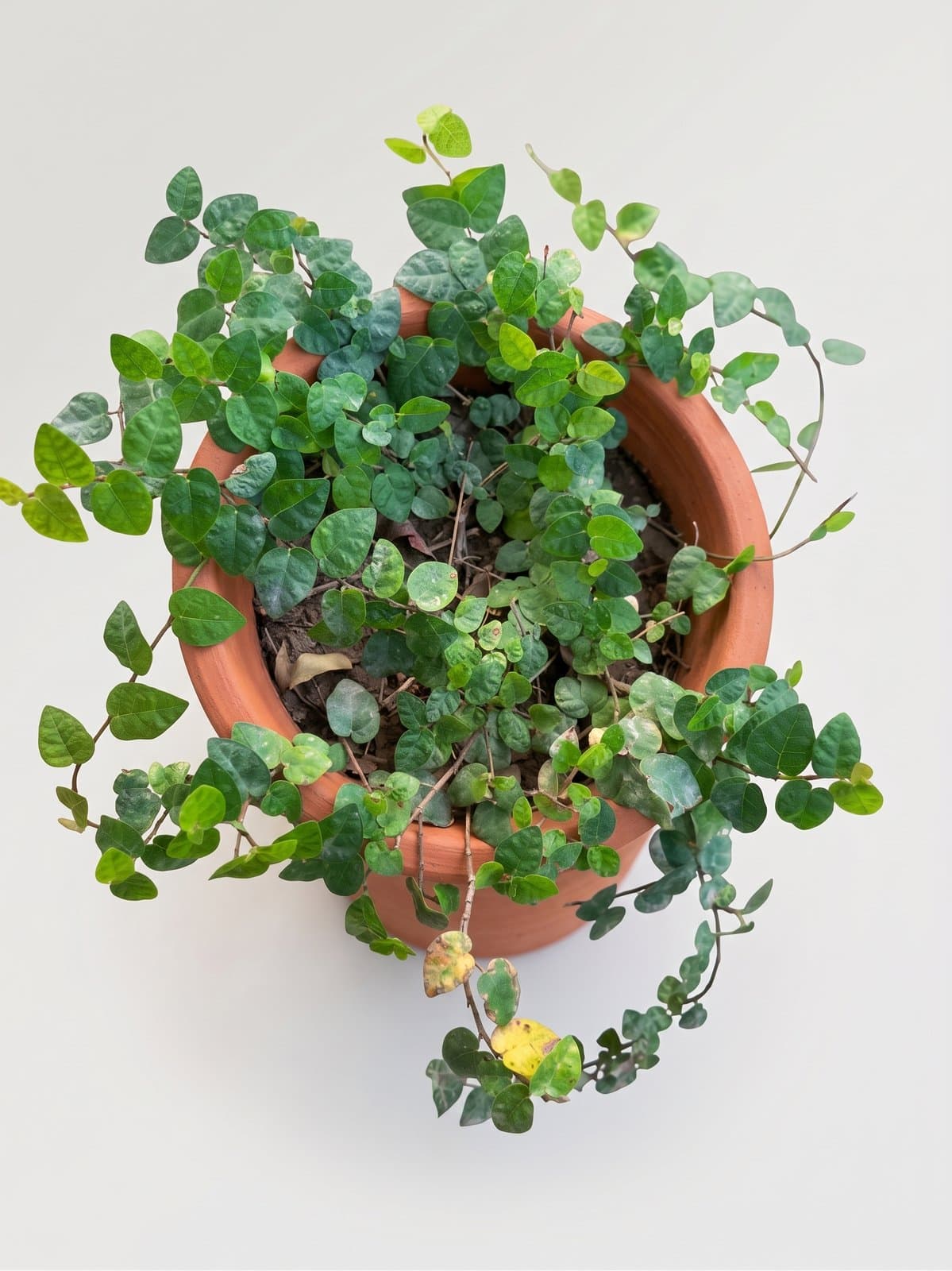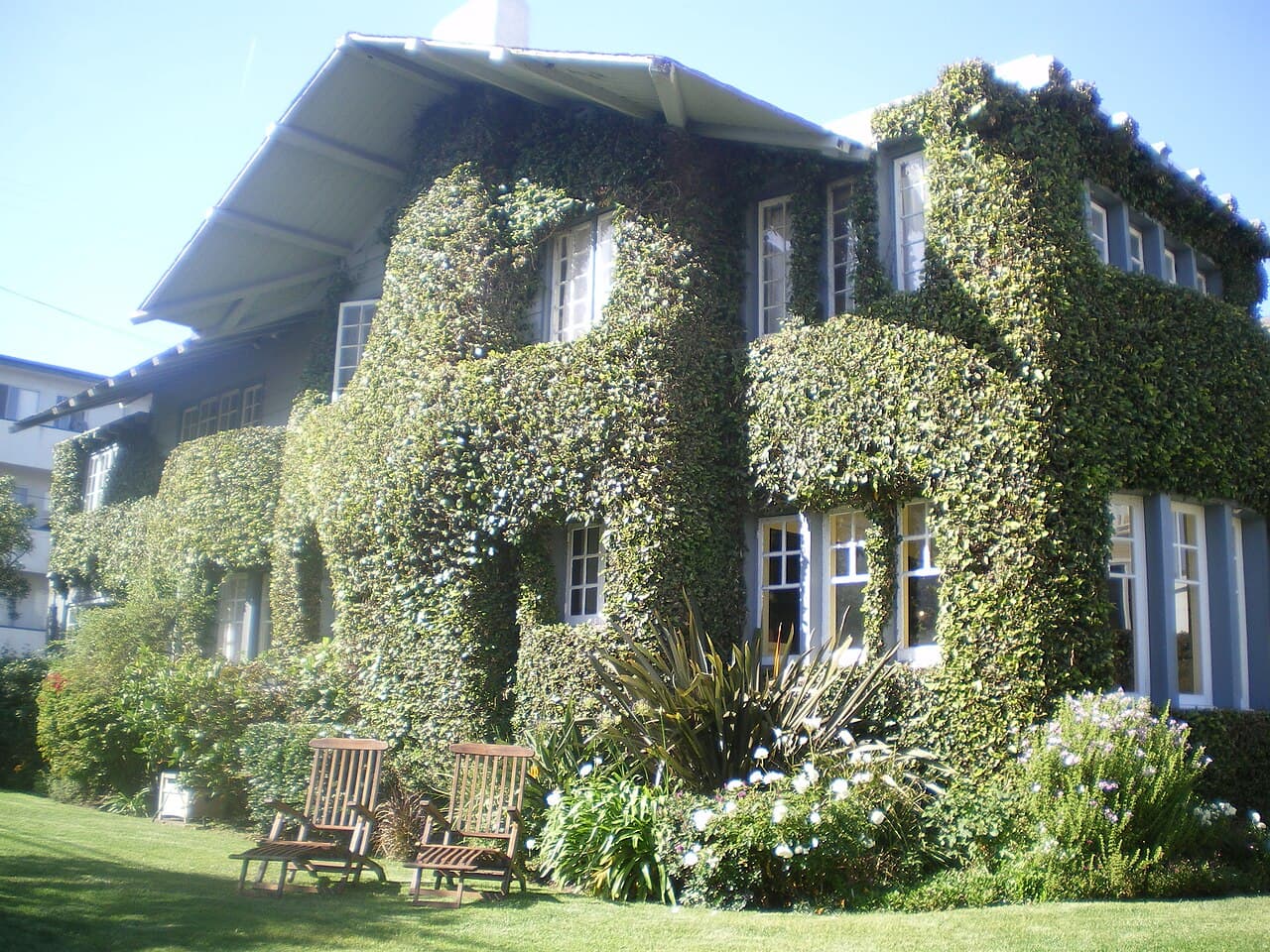
Creeping fig (Ficus pumila) is the small climber that turns a bare, sun-baked Lahore wall into a flat sheet of green. It grips brick and plaster with tiny aerial roots, needs no wires or ties, and packs its heart-shaped leaves so tightly that the wall almost disappears. It can also cover a pillar, trail from a hanging pot or clothe a small wire topiary.
As a green wall plant it is affordable, evergreen and tough, and few wall creeper plants stay so flat and neat. The honest catch: those clinging roots mark whatever they hold. Here is what we tell every customer at the farm before they take a creeping fig home.
Creeping fig's two faces: juvenile and adult growth
The look everyone wants is the juvenile growth: thin stems pressed flat to the wall and fingernail-sized leaves, rarely over 2–3 cm. A plant can stay like this for years.
Once an old, untrimmed plant runs out of wall, though, it pushes out stiff, woody "adult" branches that stand away from the surface, with leathery leaves up to about 10 cm long and sometimes small pear-shaped figs, more a curiosity than a crop. For figs to eat, see our guide to growing figs (injeer).
Where to plant creeping fig in Lahore: sun, heat and cold
Creeping fig likes morning sun or bright shade: an east- or north-facing wall, a veranda pillar, or a courtyard wall shaded after midday. Be careful with west-facing walls. In May and June they bake all afternoon and stay hot after dark, and the small leaves crisp and brown. If a west wall is all you have, pick a stretch shaded by a tree or building late in the day, and water more.
Cold is less of a worry. An established plant takes a Lahore winter in its stride, but a light frost on a still January night can brown the soft tips of a young plant, especially in a pot on an open roof. Move young pots under a veranda for the coldest week or two.
Plant from late February to March, or after the monsoon from late September into October. Against a wall, set the plant about a foot (30 cm) out from the base, where the soil is less dry, and lean its stems towards the wall.
An honest word before it climbs your wall
The aerial roots do not just rest on a wall; they glue themselves to it with a sap that hardens as it dries. That is why creeping fig climbs so well, and it has consequences:
- It sticks to paint and plaster, and pulling it off later takes paint and some of the surface with it.
- It leaves brown root marks that are very hard to scrub away.
- Roots work into cracks and old mortar joints, so a wall with loose plaster or damp can get worse.
So grow it on masonry you do not mind, such as a brick or plain-plastered boundary wall or a pillar, not on a freshly painted house front you plan to repaint. For green without the marks, fix a metal mesh or trellis a few centimetres out from the wall and let it climb that. Either way, keep it clear of windows, gutters, the outdoor AC unit, wiring and the roof edge.
Watering, soil, pots and feeding
- Summer (May–June): in the ground at the foot of a wall, soak deeply two or three times a week, as the wall's heat dries the soil fast. Pots need water daily, sometimes twice on an open roof. Water early morning or after sunset.
- Monsoon (July–September): check first, as rain is often enough, and never let water pool at the base.
- Winter (December–February): growth almost stops. Water in-ground plants every 7–10 days, and pots only when the top 2–3 cm of soil is dry.
Any soil that drains will do. For pots, mix two parts garden soil, one part well-rotted compost or old cow manure and one part coarse sand, in a 10–12 inch pot with drainage holes; use a trough or bigger pot to cover a rooftop wall. Add a handful of compost around the base in February–March and again in October. Go easy: more food means more trimming. Our rooftop and balcony gardening guide covers growing in pots up top.
Trimming and cuttings
Trimming keeps creeping fig fine and flat instead of heavy and woody. From March to October, go over it lightly with sharp shears every six to eight weeks:
- Cut back stems heading for windows, gutters, wiring or the roof edge.
- Remove stiff adult branches where they join the main stem.
- Shear the face flat if it bulges; it soon refills with small leaves.
Wear gloves, as cut stems bleed a milky sap. For new plants, push 10–15 cm pieces of young stem, lower leaves stripped, into a moist soil-and-sand mix in shade. In warm weather they root within a few weeks, no rooting powder needed.
Pests, problems and a safety note
- Mealybugs and scale: white cottony tufts in the leaf joints, or brown bumps on the stems. Dab with cotton dipped in surgical spirit, or spray a mild neem-oil mix weekly until clear.
- Dry, crispy brown leaves: too much hot sun or dry soil, usually both. Water more deeply and give afternoon shade.
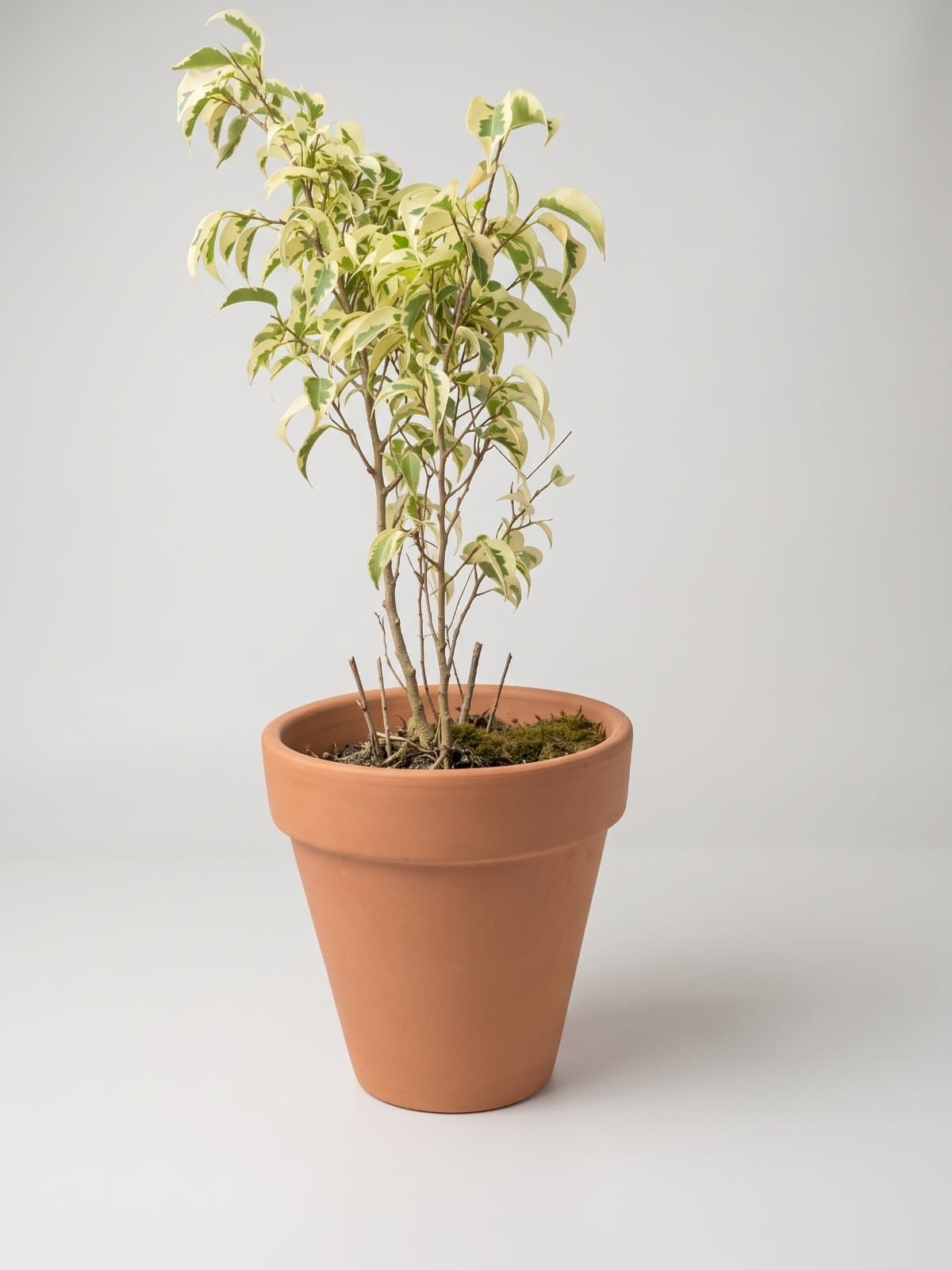
- Leaf drop: like its cousin the weeping fig, it sulks when moved, chilled or kept soggy. Leave it in one spot and let the soil drain between waterings.
Like every ficus, creeping fig has a milky sap that can irritate skin, more so if it then meets strong sun, so wash it off promptly. The ASPCA, an American animal-welfare society, lists fig plants as toxic to cats and dogs; chewed leaves can cause drooling, a sore mouth or vomiting. It is rarely serious, but hang pots out of reach of pets and small children, and call your vet if an animal eats a lot. Our weeping fig guide says more about ficus sap, and we keep a list of pet-safe indoor plants too.
Common questions
Does creeping fig damage walls?
Mainly the surface: it clings to paint and plaster, leaves root marks that are hard to clean and creeps into existing cracks. Grow it on brick, on a wall you will not repaint, or on a trellis set slightly off the wall.
How fast does creeping fig grow?
Slowly at first. Gardeners say it sleeps the first year, creeps the second and leaps the third, while it builds roots. After that a Lahore summer pushes it hard, and it can cover a good stretch of wall in two to three years.
Can I grow creeping fig in a pot or indoors?
Yes. It does well in a hanging pot on a shaded balcony, or indoors near a bright window, away from the blast of the AC. Keep the soil lightly moist, mist the leaves in dry weather and trim it to size.
How do I make creeping fig stick to the wall?
Give it a rough surface such as brick, unpainted plaster or concrete; it struggles on smooth, glossy paint. Hold young stems against the wall with masking tape or small clips for a few weeks, and keep the wall lightly damp in dry weather until the roots grip.
We grow Creeping Fig on our own farm in Jallo More, Lahore, and a young, well-rooted plant is Rs 100. See it on the Creeping Fig page, then message us on WhatsApp to reserve yours. Pick it up at the farm or get it delivered anywhere in Lahore, and browse our plants while you are at it.
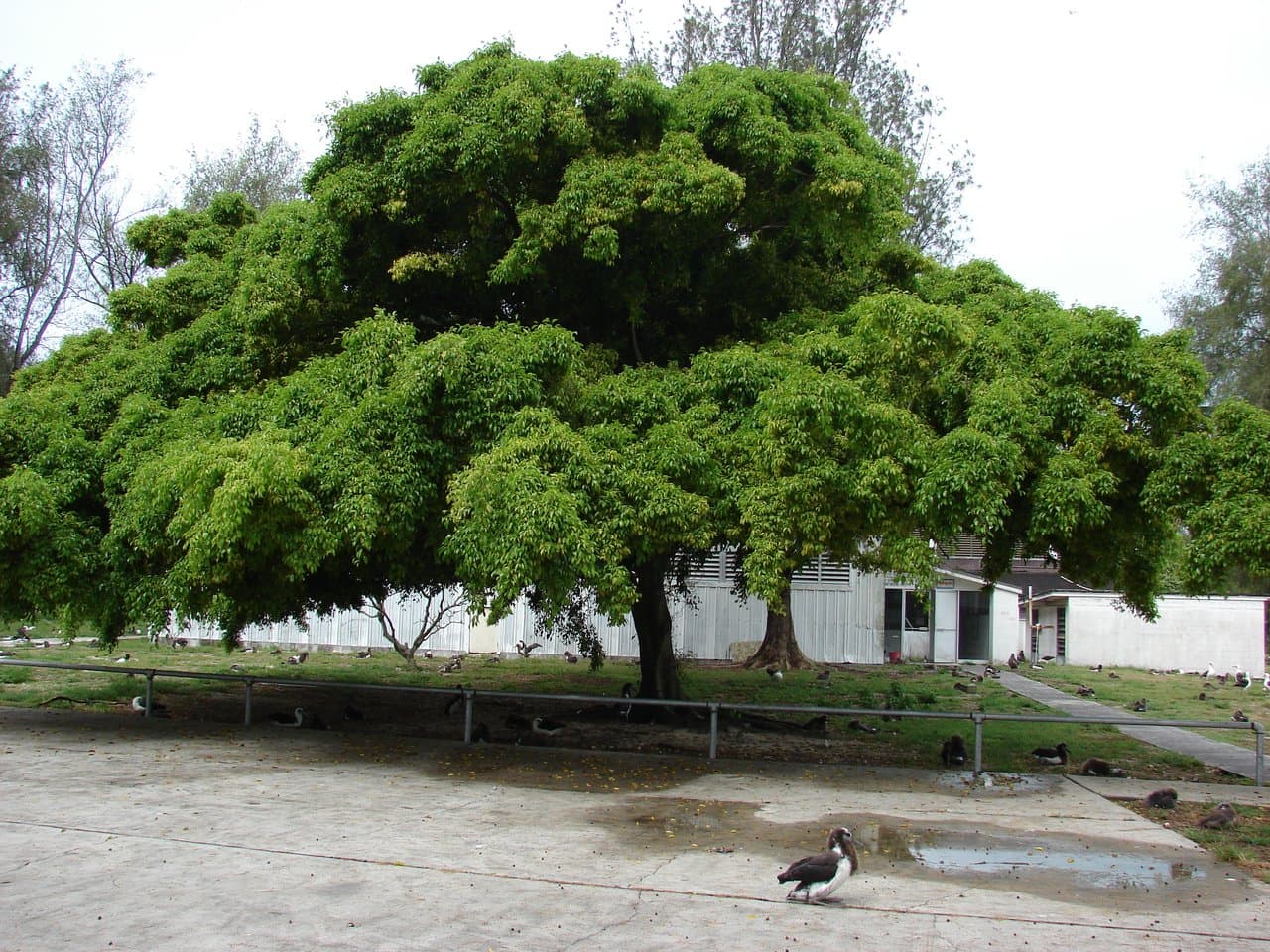
Photo: Los Angeles, CC BY-SA 3.0, via Wikimedia Commons.