If you have ever asked a nursery for a pine tree for your Lahore garden, you have probably discovered that the world of pine and conifers is far more tangled than it looks. Half the tall, feathery evergreens sold locally as "pine" are not true pines at all, and the ones that genuinely are pines belong up in the cool hills — not down here on the hot Punjab plains. The good news is that several handsome, needle-and-scale evergreens grow beautifully in Lahore once you know what they actually are and how to treat them. Here is an honest guide to the conifers that really work in a plains garden.
What people call "pine" is usually not a pine
True pines belong to the genus Pinus. The two best known in Pakistan — chir pine (Pinus roxburghii) and blue pine (Pinus wallichiana) — are Himalayan hill trees. They evolved for cool mountain valleys roughly between 1,000 and 3,000 metres, with cold winters and mild summers. Lahore's blazing heat and heavy, often waterlogged soil are the opposite of what they want, so a real chir or blue pine planted in a city garden here tends to sulk, brown off and slowly decline. If you fell in love with a "pine" in Murree or Nathia Gali, enjoy it there — it is not a plant for the plains.
The conifers that actually thrive in Lahore
Two evergreen conifers are genuinely at home in Lahore gardens, and you have almost certainly seen both:
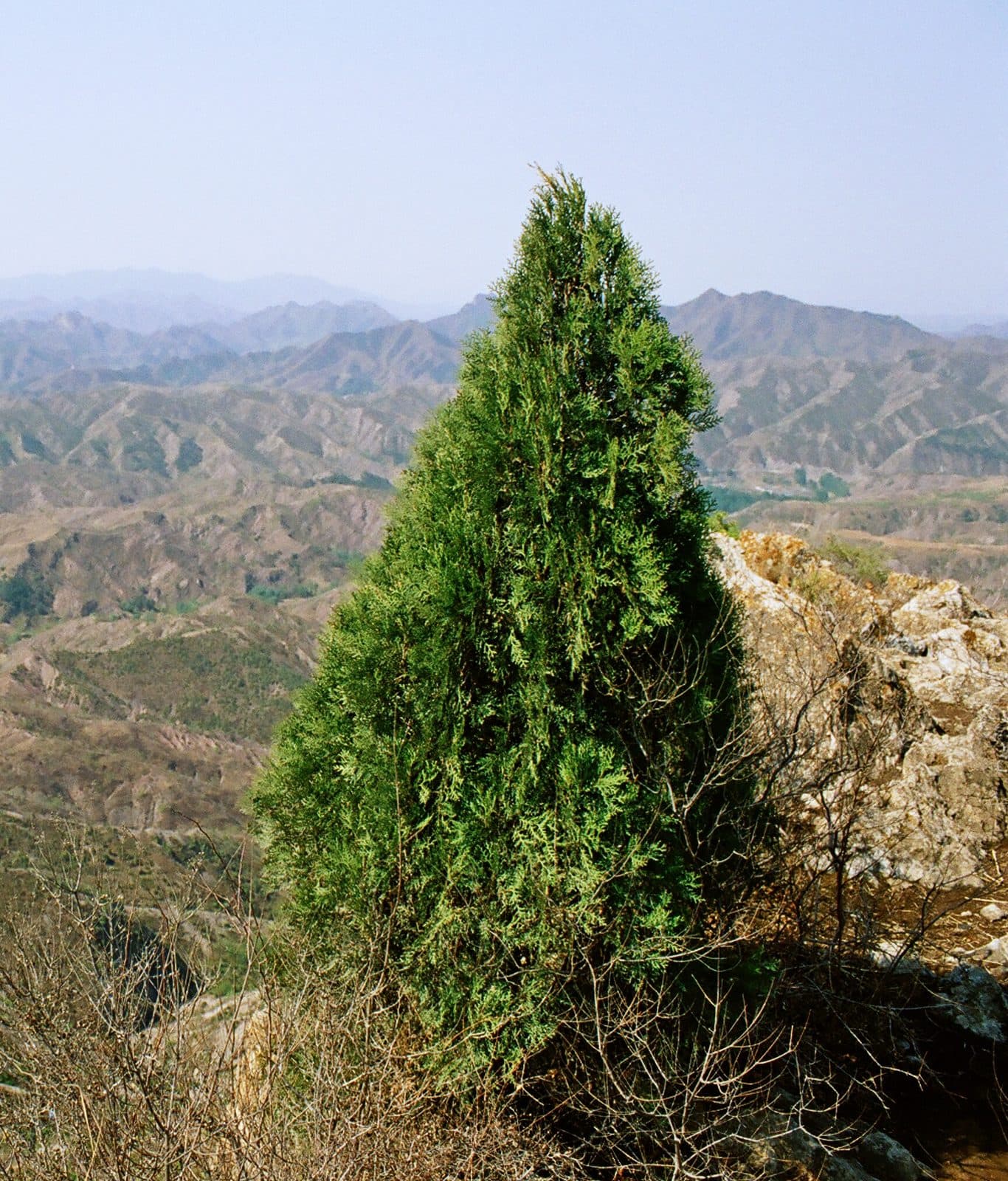
- Morpankh — this is Thuja, botanically Platycladus orientalis (Oriental arborvitae). It is a real conifer, with soft, fan-like sprays of scale leaves held in flat vertical planes. It forms a neat cone about 3–6 metres tall, takes clipping well, and is the classic gate-side and hedge plant right across Punjab.
- Cypress / saru — the tall, pencil-thin, dark green columns you see flanking driveways and boundary walls are usually Cupressus sempervirens, the Italian or pencil cypress. Also a true conifer, it loves full sun and sharply drained ground, and gives a garden that formal, Mediterranean line.
Both are far better suited to our heat than any true pine, and both deliver the year-round green, screening and structure most people are really after when they ask for a "pine."
The "ashok" tree is not a pine either
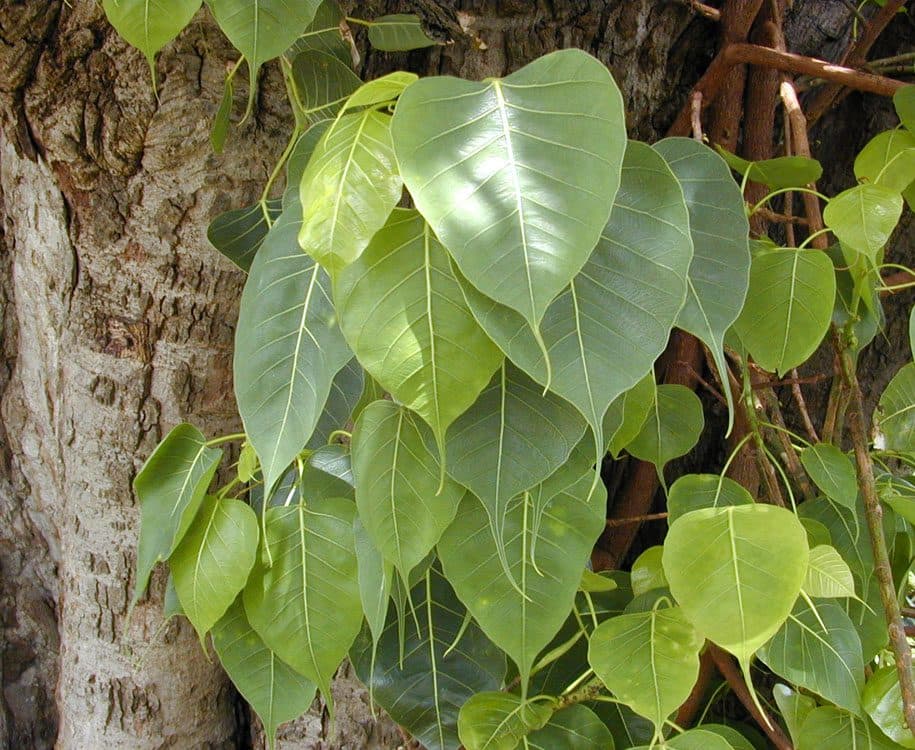
The very tall, narrow, drooping green column sold everywhere as "ashok" or "ashoka" for screening is neither a conifer nor a pine. It is almost always Polyalthia longifolia — often called the false ashoka or mast tree — a flowering, broadleaf tree in the custard-apple family. It makes a fine, fast screen along a boundary, but treat it as a leafy tree, not a needle conifer. (Confusingly, the true Ashoka, Saraca asoca, is a completely different flowering tree.) None of these are related to pine, so if someone offers you an "ashok pine," you now know the label is doing some creative work.
The little "Christmas tree" in a pot
The cute, perfectly symmetrical "Christmas tree" sold in a pot around December is usually Araucaria heterophylla, the Norfolk Island pine. Despite the name it is not a true pine and not frost-hardy — it is a tender, subtropical plant that does best as an indoor or shaded-veranda pot plant with bright indirect light and steady moisture. It will never grow into an outdoor forest pine on your lawn, so keep it in its pot and enjoy it as a houseplant.
How to grow conifers in a Lahore garden
Whether you plant morpankh, cypress or another ornamental evergreen, the rules are the same and they are simple. These plants fail in Lahore for one reason far more often than any other: wet feet.
- Full sun. Give them the brightest spot you have. Conifers grown in shade go thin and leggy.
- Well-drained soil. This matters more than anything else. Mix in sand or grit if your soil is heavy clay, and plant slightly raised so water never sits around the collar.
- Deep but infrequent watering. Water thoroughly, then let the top few centimetres dry out before watering again. Once established, they are quite drought-tolerant — daily light sprinkling is a common way to kill them.
- No waterlogging. Avoid low spots that flood in the monsoon; standing water rots the roots and browns the foliage from the inside out.
- Light feeding and shaping. A little balanced fertiliser in spring and autumn, plus light clipping to hold the shape, is all most of them need.
Get the drainage and the sun right and these evergreens are among the most trouble-free, good-looking plants you can grow here.
Common questions
Can I grow a real pine tree in Lahore?
Honestly, not well. True pines are hill trees and struggle in the heat and heavy soil of the plains. For a green, evergreen, cone-shaped look that actually thrives, choose morpankh (thuja) or a cypress instead. If you are just starting out, our beginner's guide to gardening in Pakistan will help you get the soil and watering right first.
What is the best evergreen for a privacy screen or boundary?
Cypress and morpankh both make excellent formal screens, and false-ashoka (Polyalthia) gives a fast leafy column. If you want a living green wall that grows quickly and fills in fast, also look at our guide to growing bamboo as a privacy screen — for many Lahore plots it is the quickest way to block a view.
My conifer is turning brown — what went wrong?
Nine times out of ten it is water: either the roots are sitting in wet, poorly drained soil, or the plant dried out completely and could not recover (conifer needles that fully brown usually do not green up again). Check the drainage first, water deeply but less often, and make sure it is getting full sun.
We do not currently keep ornamental conifers or "pines" at the farm, but message us on WhatsApp and we can arrange healthy morpankh, cypress and other evergreens for you on order. For a hardy outdoor shade tree you can plant right now, we do keep the chinaberry tree (bakain) — a tough, fast-growing Lahore favourite that shrugs off our heat with ease.