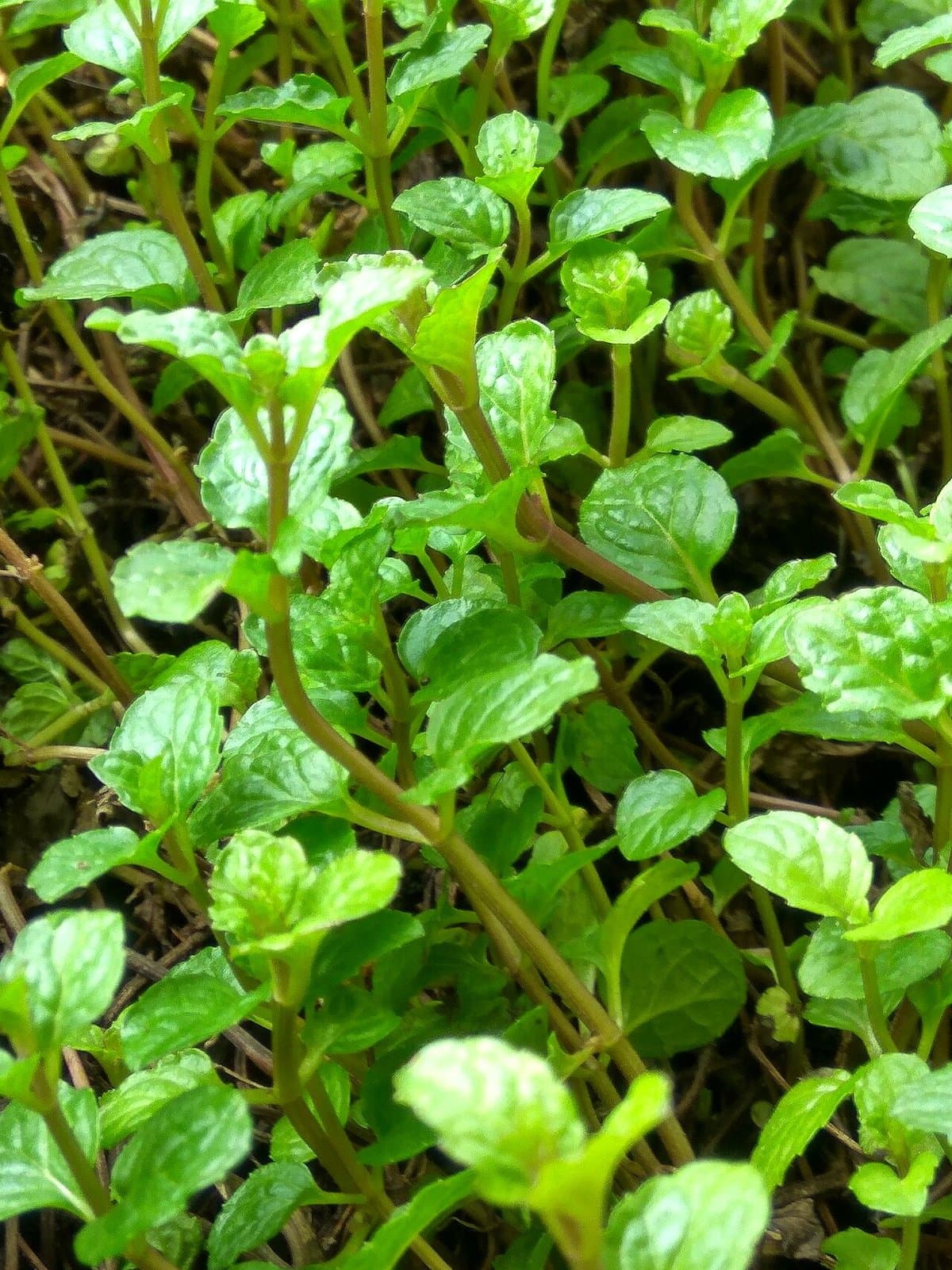
Mint — podina — is the easiest herb you can grow at home in Lahore, and once you have a healthy pot going you will never buy a limp bunch from the sabzi mandi again. A single sprig rooted in a glass of water becomes a whole pot in a few weeks, and it asks for very little: a container, moist soil, and some shade from our worst summer sun.
The one thing to know before you start is that podina is a spreader — given open ground it takes over a whole bed by sending runners under the soil. Keep it in a pot and that same vigour works for you: a thick, generous supply of leaves for chutney, raita and tea, all season long.
Start podina from a cutting or a shop sprig
You do not need seeds or even a nursery plant to begin. The quickest route is water-rooting a stem:
- Take a fresh sprig 10–15 cm long — even one from a bunch bought for the kitchen will do, as long as it has not wilted.
- Strip the lower leaves and stand the bare stem in a glass of clean water on a bright windowsill, out of direct afternoon sun.
- Change the water every couple of days. White roots appear at the leaf nodes within one to two weeks.
- Once the roots are 2–3 cm long, pot the cutting up in moist soil and keep it shaded for a few days while it settles.
You can also push a cutting straight into damp potting mix and keep it shaded until it takes. Spring (February–March) and early autumn (September–October) are the kindest times to start; indoors you can root cuttings almost year-round.
Keep it in a pot, not a bed
This is the golden rule with podina. Its roots are really rhizomes — underground stems that creep sideways and pop up new shoots a foot away. In a garden bed it will swallow your other herbs. In a pot the roots stay put and the plant pours its energy into leaves instead.
- Use a wide pot at least 25–30 cm (10–12 inches) across with open drainage holes — mint likes room to run but hates sitting in water.
- Fill with ordinary garden soil loosened with compost or old manure, so it drains yet holds moisture. Podina is not fussy about soil.
- Stand the pot on a surface, not on bare earth — stems that flop over the rim will root wherever they touch soil, and that is how it escapes.
Light and water through the Lahore year
Podina is a cool-weather herb at heart, so our summer needs managing. In the fierce heat of May and June, full afternoon sun scorches the leaves crisp. Give it morning sun and afternoon shade, or a bright east-facing balcony or windowsill — four to six hours of gentle light is plenty.
- Water: keep the soil evenly moist at all times — never bone-dry, never a swamp. In peak summer that can mean a drink every day; in winter, far less.
- Summer: the plant may look tired and leggy in the worst heat. Keep it shaded and watered and it will pull through.
- Monsoon: the humid July–August spell is when rust (see below) is most likely, so keep the leaves from staying wet and crowded.
- Winter: growth slows right down and a hard cold snap can knock the top growth back, but the roots survive Lahore's mild winters and flush again with new leaves in spring.
Harvest, feed and refresh a tired pot
Harvest by pinching out the top pair of leaves on each stem rather than stripping from the bottom. This is the whole trick to a bushy pot: every time you pinch a tip, the stem branches into two and grows fuller instead of tall and bare. The more you pick, the more you get.
- Feed lightly once a month in the growing season — a spoon of compost or a weak dose of any general fertiliser keeps the leaves lush and dark.
- After a season or two the pot turns woody and the stems go bare at the base. Refresh it: cut everything back hard, lift the rootball, tear it into pieces, and replant a few healthy chunks in fresh soil. You get a brand-new pot for free.
Fresh podina goes straight into chutney, raita, biryani and pulao, and a handful of leaves steeped in hot water makes a soothing podina tea that settles a heavy stomach. In summer it is the heart of a jug of mint lemonade.
Pests and problems
Podina is tough, but two things trouble it here:
- Rust: a fungus that shows up as tiny orange-brown spots under the leaves, worst in the humid monsoon. Pick off and bin affected leaves, thin crowded stems for airflow, and avoid wetting the foliage in the evening. In a bad case, cut the whole pot back and let it regrow clean.
- Aphids: small green or black insects that cluster on soft new tips. Wash them off with a strong spray of water or a little soapy water — since you are eating the leaves, skip harsh chemical sprays.
Common questions
Will podina survive the Lahore summer?
Yes, if you move it out of the harsh afternoon sun and keep the soil moist. It may look tired in June, but shaded and watered it holds on and bounces back as the weather cools.
Can I grow mint indoors?
Yes. A bright windowsill or kitchen shelf that gets a few hours of light works well, and indoors it can grow almost all year. Just turn the pot now and then so it does not lean toward the light.
Do you sell mint plants?
Podina is not a regular item on our shelves, but we can usually arrange a rooted herb plant on request. Message us and we will tell you what we can source and when.
Why is my mint going tall and bare at the bottom?
It has not been pinched enough and may need more light. Pinch out the growing tips regularly to force branching, and if the pot is old and woody, cut it back hard and replant fresh cuttings.
Podina is the perfect first step into kitchen gardening in Lahore — cheap, fast and useful every single day. Herbs like mint are not always on our shelves, but we are happy to try to arrange a rooted plant for you; just message us on WhatsApp. And if you are building a little kitchen corner, pair it with a lemon plant for fresh nimbu paani, or read our guides to growing lemongrass and rosemary at home.