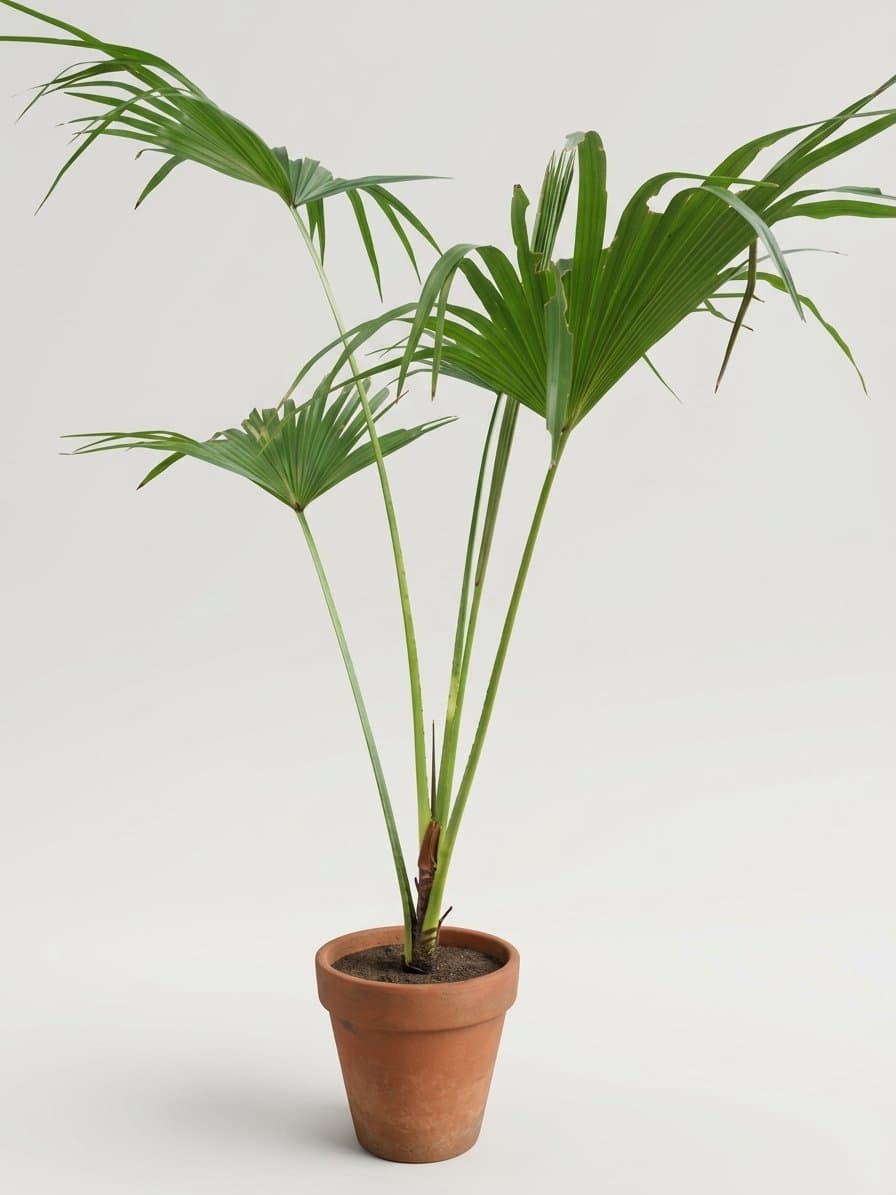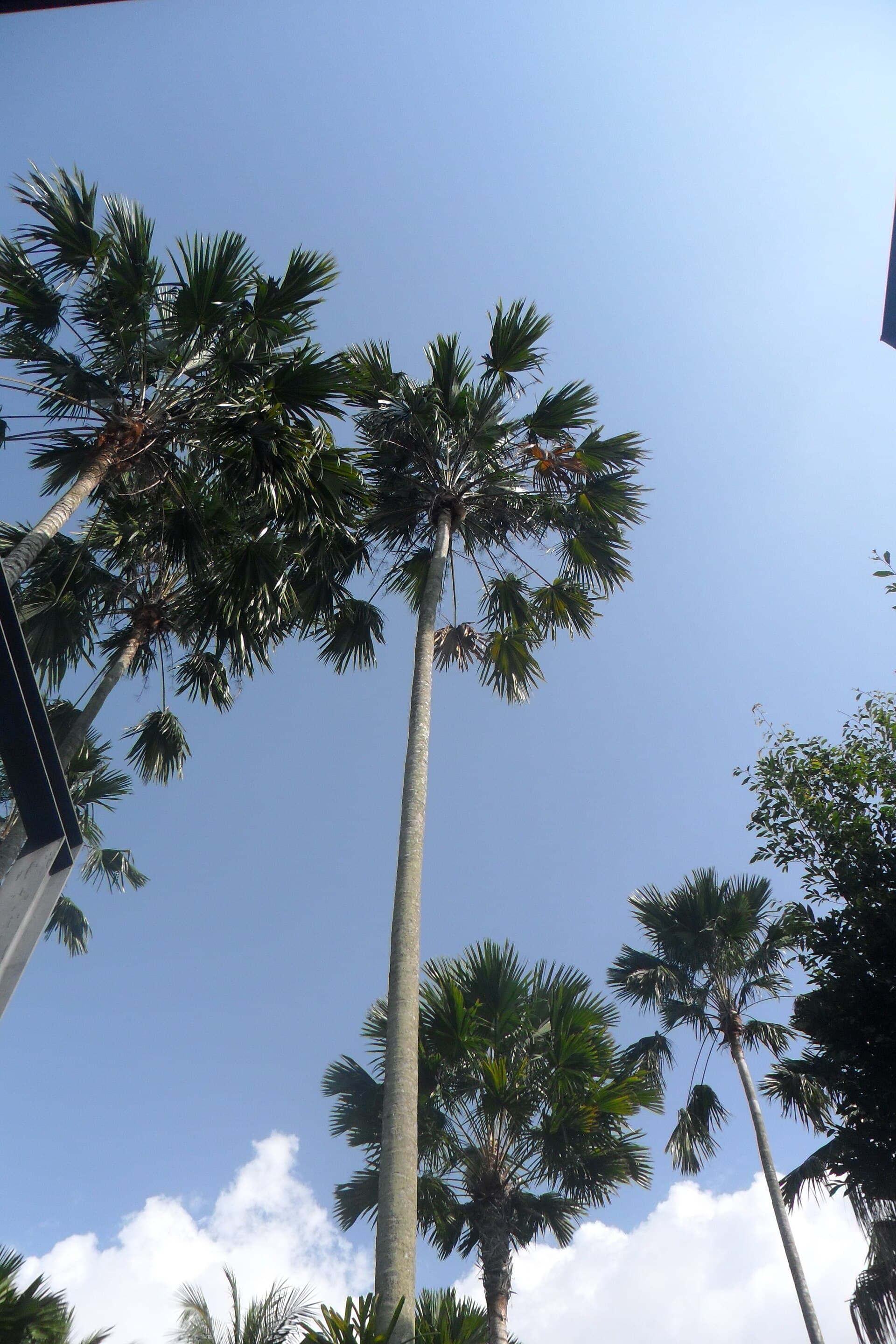
Few indoor palms bring a room to life the way the Table Palm (Livistona rotundifolia) does, its glossy, deeply pleated fans opening into almost perfect circles. Known also as the footstool palm or round-leaf fan palm, it stays compact and table-sized while young, which is exactly what makes it such a smart choice for a bright indoor corner, an office desk or a shaded veranda in Lahore. It gives you the elegant, tropical look of a garden palm without ever taking over the room.
Light — bright but never harsh
The Table Palm wants plenty of bright, indirect light. A spot a metre or two back from an east- or north-facing window is ideal, where the room stays airy and well lit but the leaves are out of the direct beam. What it will not forgive is harsh afternoon sun coming straight through glass — in Lahore's fierce May and June that magnified light scorches the fans, leaving crisp brown patches that never green up again. If the only bright window you have faces west or south, hang a thin net curtain to soften the glare, or shift the pot back into the room during the worst hours.
Water and soil
Keep the watering simple and honest: feel the soil, and water only when the top inch has dried out. Then water thoroughly until it runs from the drainage holes, and tip away anything that collects in the saucer. The one thing a Table Palm truly hates is standing in water — soggy soil suffocates the roots and quickly turns into root rot, the commonest way these palms are killed with kindness. Plant it in a free-draining potting mix (ordinary potting soil loosened with a handful of sand or perlite) in a pot with a proper drainage hole. In summer you may water two or three times a week; in winter, far less, so always let the soil be your guide rather than a fixed schedule.
Heat and the Lahore seasons
Indoors, the Table Palm is comfortable in the same warmth we are, and our long hot months suit it well as long as it is shaded from direct sun. The real care point in Lahore is the winter: this is a tropical palm and it dislikes cold. A few chilly nights indoors are fine, but keep it away from hard frost, and if you grow it on an open veranda move it inside on the coldest December and January nights. Dry indoor air and the blast of an air-conditioner or heater can brown the leaf tips, so mist the leaves now and then, or stand the pot on a tray of pebbles and water to lift the humidity around it.
Feeding and growth
This is a slow grower, and that patience is part of its charm — it will hold its neat, table-top size for a good while before it ever thinks about outgrowing its corner. Feed it lightly through the warm growing season, roughly once a month from spring to early autumn, with a balanced liquid houseplant feed diluted to half strength. Stop feeding in winter when growth naturally pauses. Because it grows slowly, it rarely needs repotting more than every couple of years; when the roots fill the pot, move it up just one size in spring. Wipe the broad fans with a damp cloth occasionally to clear dust — clean leaves both look better and breathe better.
Common problems
Brown, crispy leaf edges almost always mean dry air or under-watering; brown, soft, yellowing lower leaves point the other way, to overwatering. Bleached or scorched patches in the middle of a fan are sunburn — move it out of direct light. In dry indoor conditions watch for spider mites, a fine webbing on the undersides of the leaves; a firm wipe-down and the occasional shower under the tap keeps them in check. An older frond yellowing and dying off at the base is perfectly normal — just trim it away at the stem.
Common questions
Is the Table Palm safe for cats, dogs and children?
Yes. The Table Palm is non-toxic and safe around pets and small children, which makes it one of the more relaxing choices for a family home — no worry if a curious cat or toddler nibbles a leaf.
Why are the tips of my palm turning brown?
Brown tips are usually about air and water, not soil. Dry indoor air — especially near an AC or heater — is the most common cause, followed by letting the soil go bone dry between waterings. Raise the humidity with misting or a pebble tray and keep the watering steady, and new growth will come through clean.
How big will it get indoors?
Grown in a pot indoors it stays modest for years, comfortably a table or desk plant, and only slowly builds toward a taller floor palm. Its slow pace means you are not forever finding it a bigger home.
Can I keep it on the veranda?
Yes, a shaded veranda is a lovely spot in the warm months — just keep it out of direct afternoon sun, and bring it indoors on the coldest winter nights to protect it from frost.
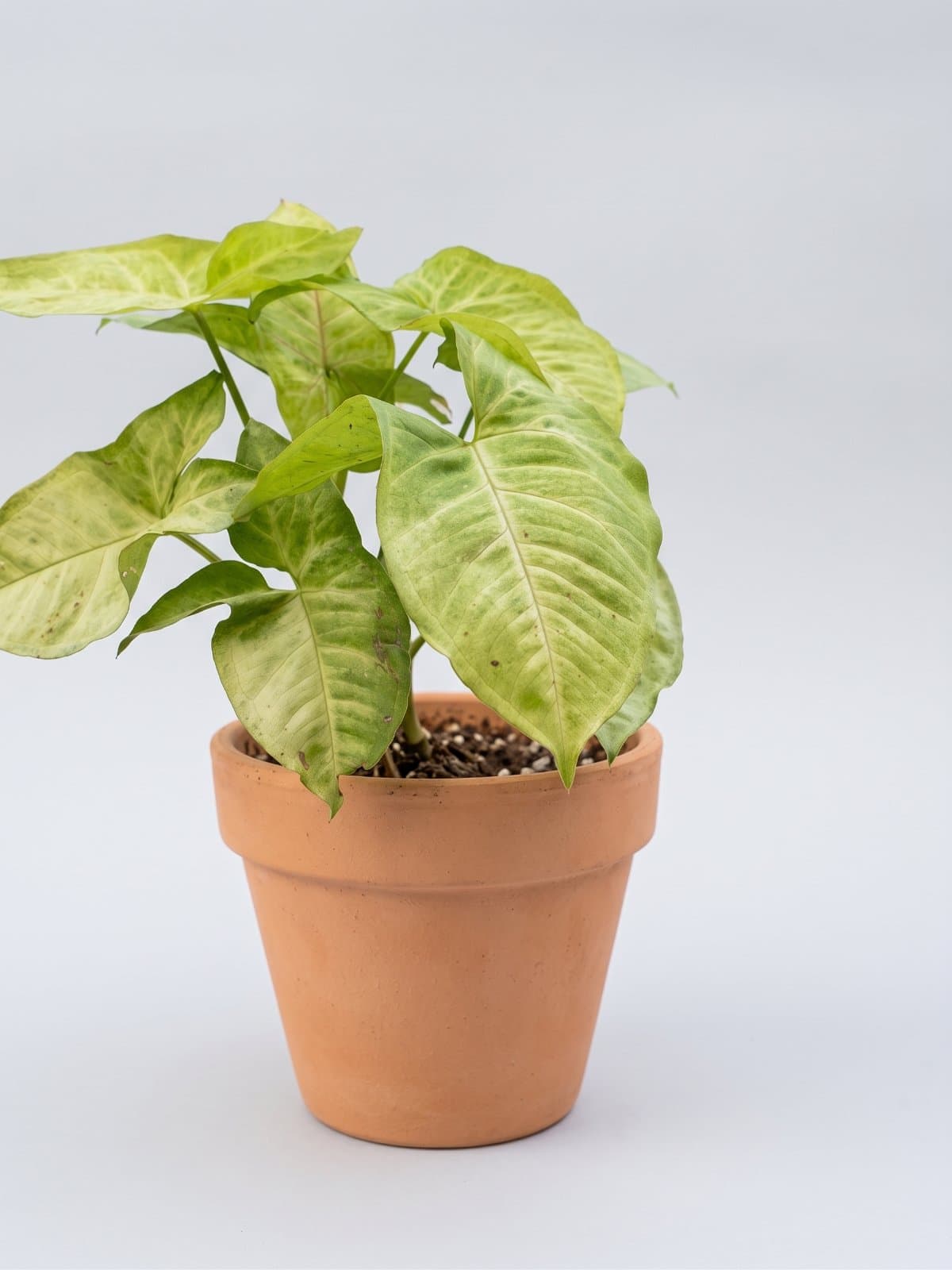
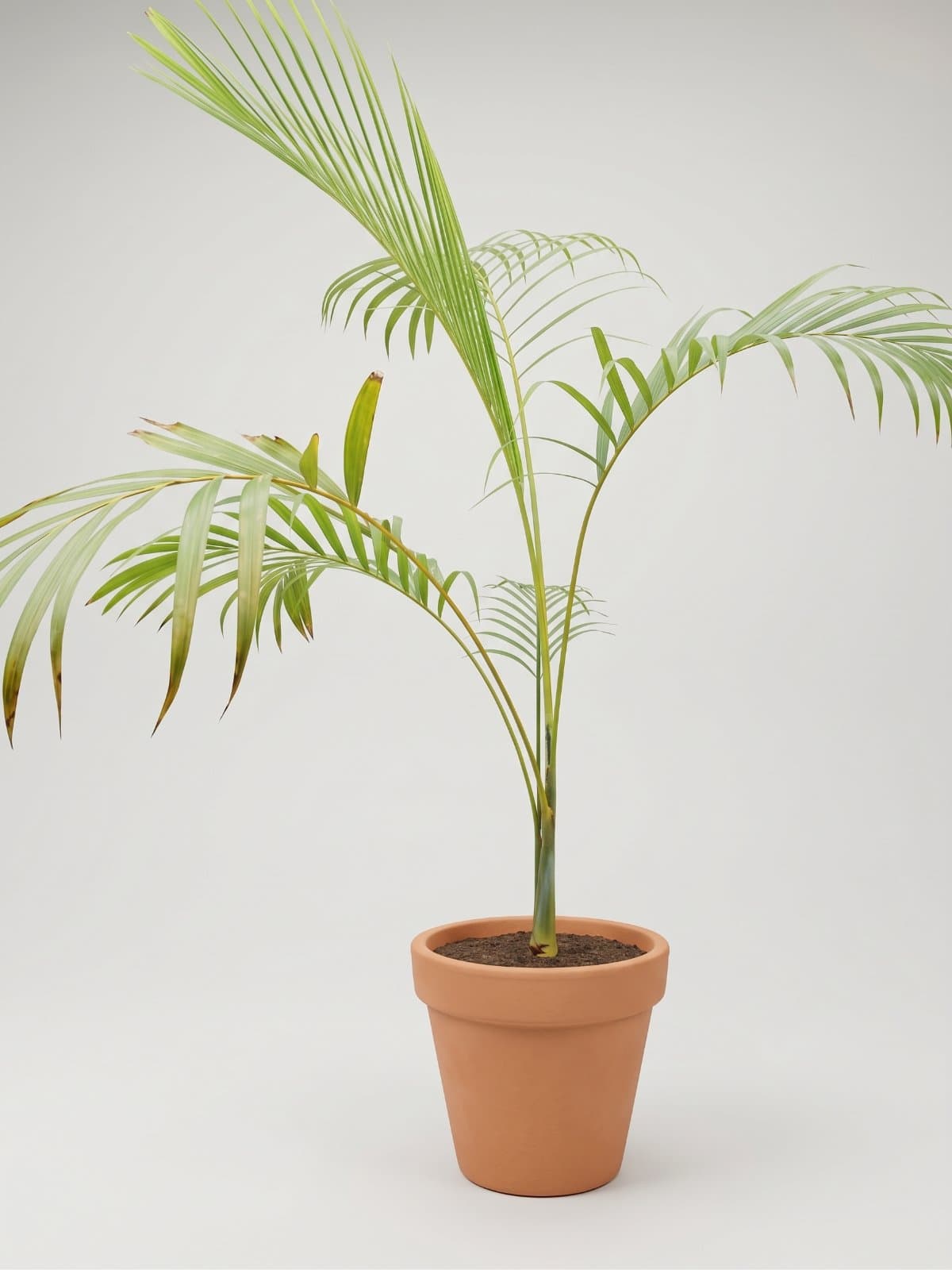
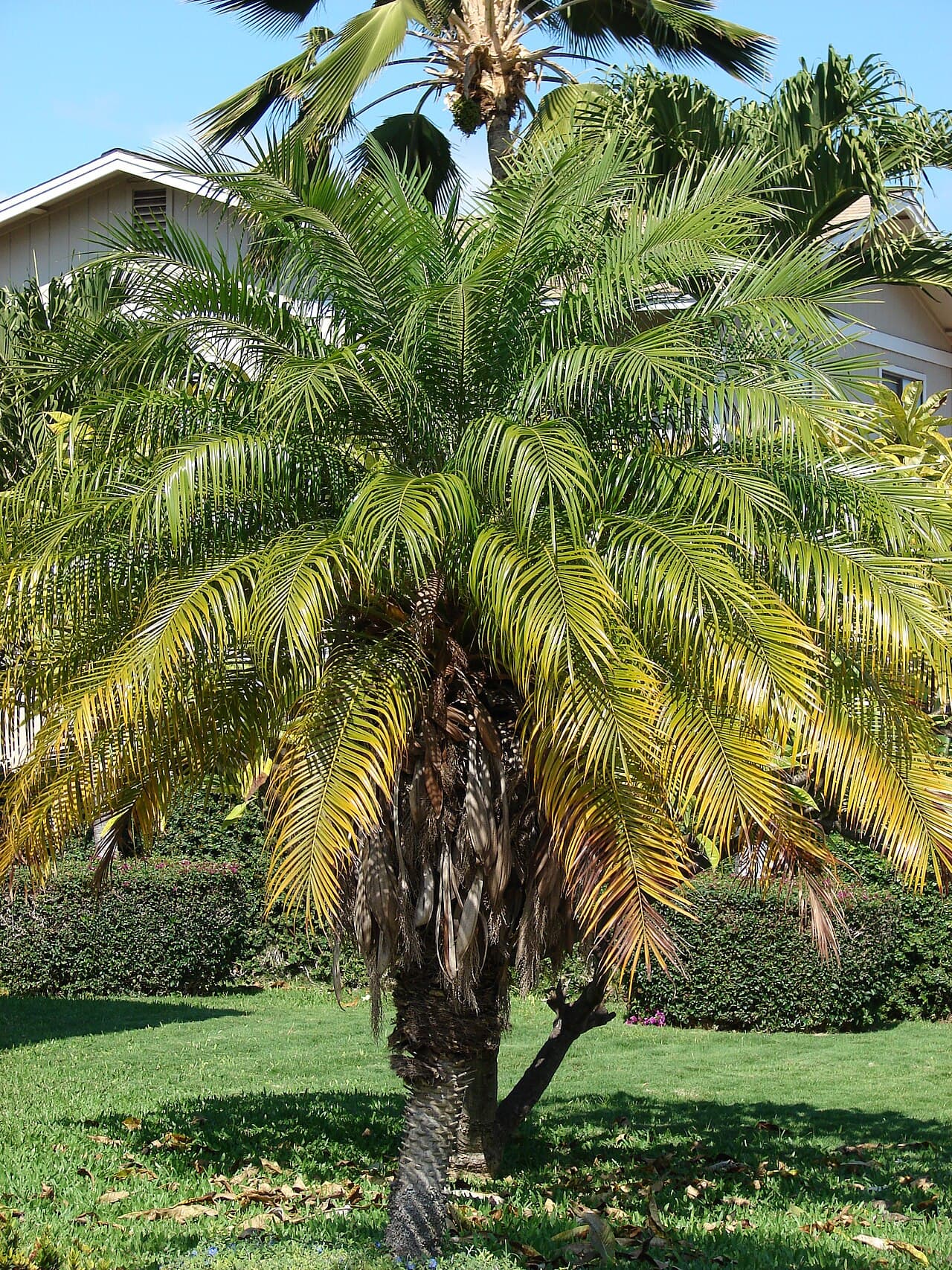
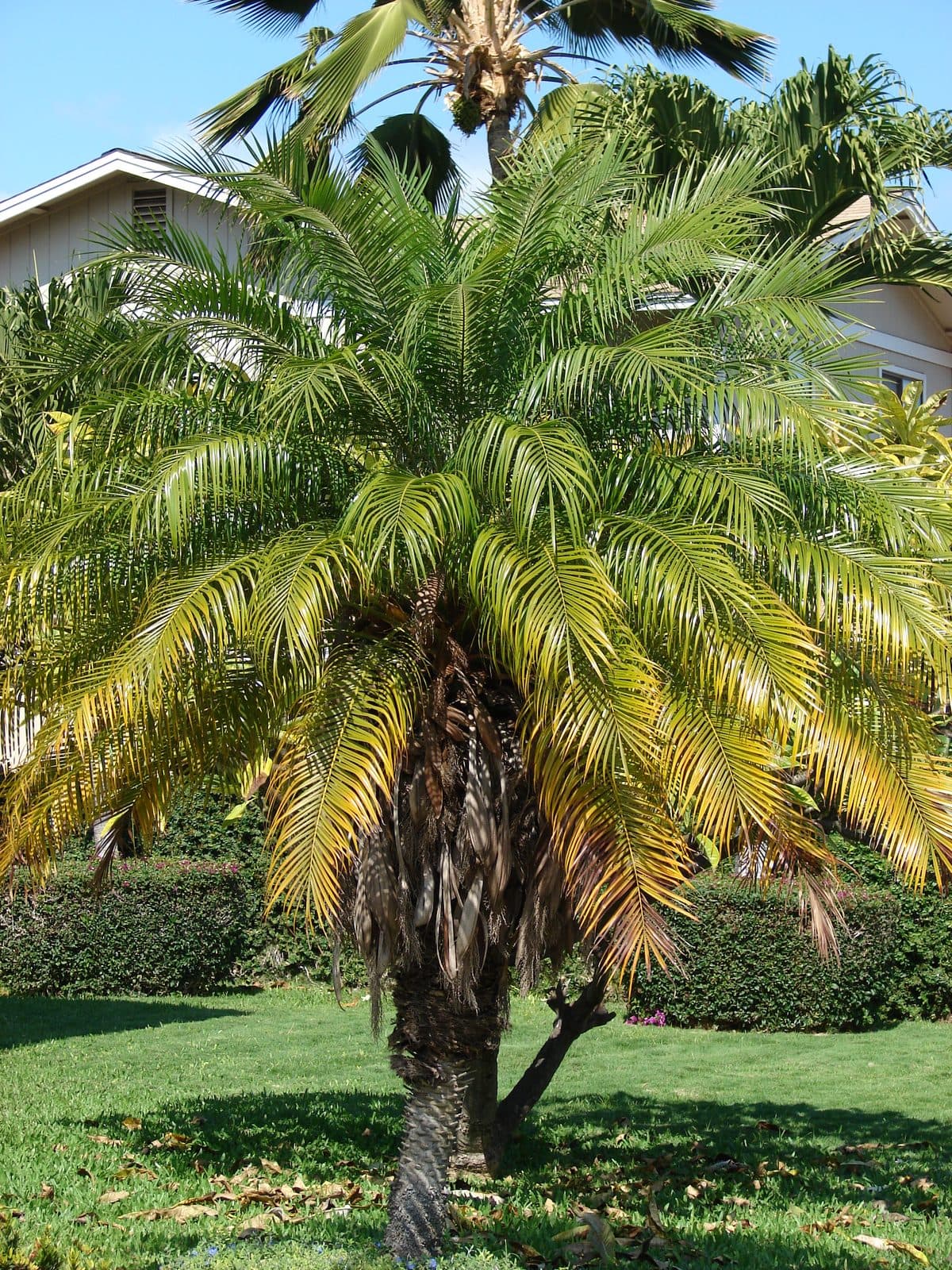
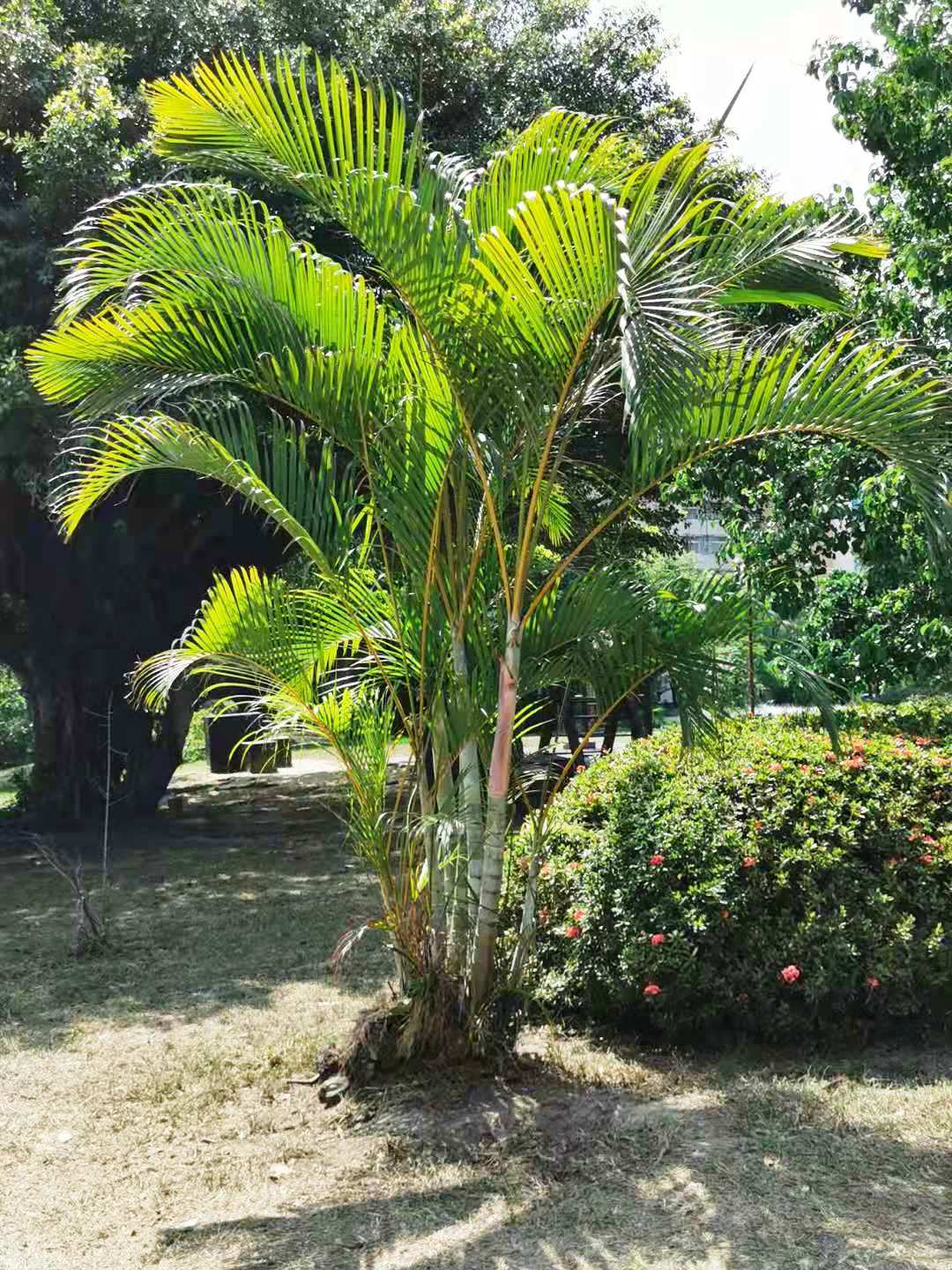
If you would like one for your home or office, our Table Palm (Livistona) is in stock at just Rs 250 — a lot of style for the price. Prefer something with feathery fronds instead of fans? We also keep the Areca Palm and the compact Pygmy Date Palm, both Rs 300. Read more in our guide to palms for Pakistani homes and gardens and our pick of the best office desk plants, or browse our plants. To reserve one, message us on WhatsApp or visit us in Jallo More, Lahore.
Photo: Pescov, CC BY-SA 3.0, via Wikimedia Commons.