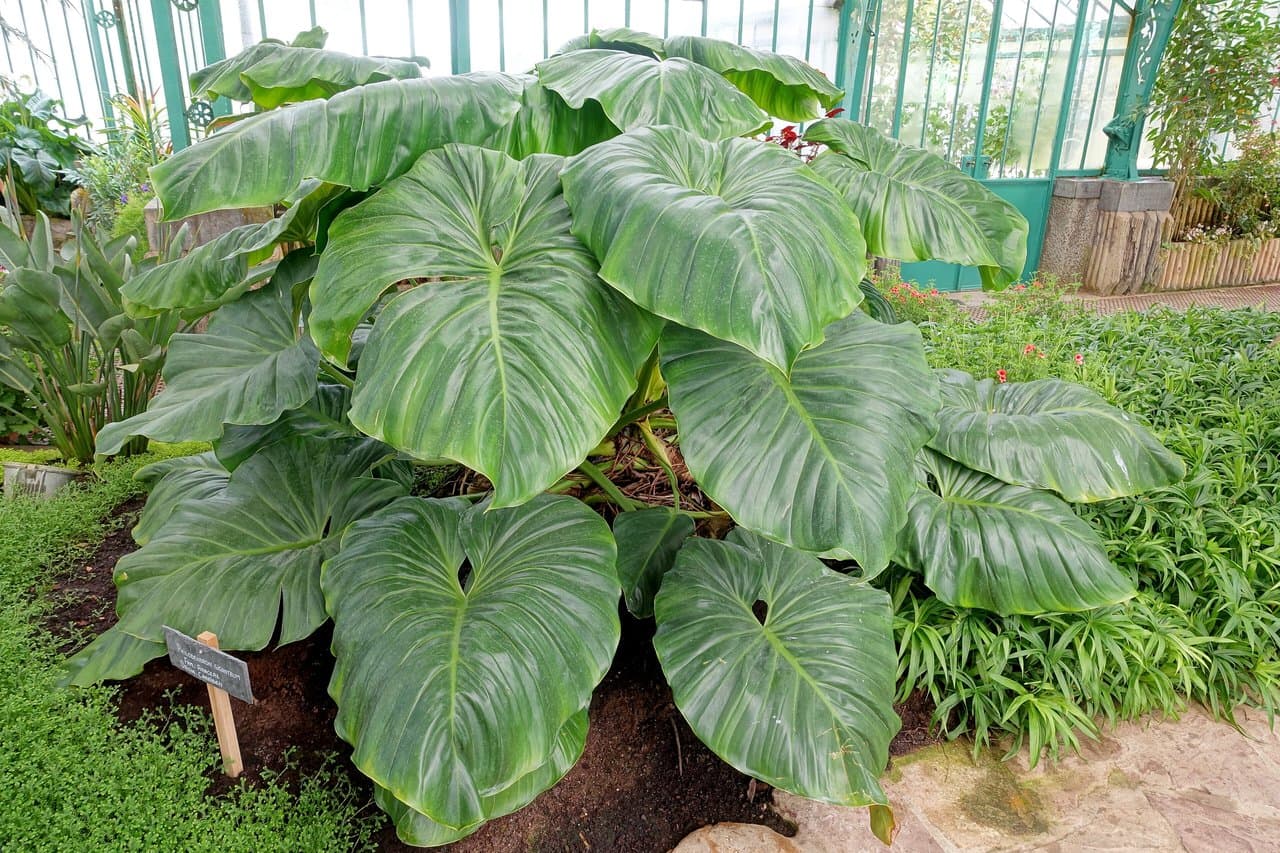
The philodendron is one of the most forgiving leafy houseplants you can bring into a Lahore home — a lush, deep-green climber (or trailer) that asks for very little and grows happily in the indirect light of an ordinary living room. The name covers a big family: the trailing, heart-leaved kinds (Philodendron hederaceum, the “heartleaf”) that spill from a shelf or climb a pole, and the bold, upright “self-heading” types like the split-leaf philodendrons that sit in a corner like a small green sculpture. Whichever you have, the care is much the same, and it is genuinely easy.
People often mix the philodendron up with the pothos “money plant” that grows in almost every Pakistani drawing room — understandable, because the leaves look alike. They are cousins, not the same plant, and below I explain how to tell them apart. First, the care.
Light and watering — the two basics
A philodendron does best in bright, indirect light — near an east-facing window, or a few feet back from a brighter one, where the leaves get plenty of glow but no harsh midday sun. It tolerates medium and even fairly low light better than most plants, which is why it survives in offices and dim corners; in real gloom, though, growth slows and the stems stretch. Keep it out of the fierce direct summer sun of a Lahore south- or west-facing window, which can scorch the leaves through glass. Water when the top inch or two of soil has dried, then water thoroughly and let the excess drain — it likes soil lightly moist, never soggy, since sitting in water is what rots the roots.
- In summer heat it drinks more — often twice a week — so check every few days.
- In winter growth slows right down; water much less, only when the top has dried.
- Always use a pot with a drainage hole, and tip away any water left in the saucer.
- Yellow, mushy lower leaves usually mean too much water; crispy brown edges mean too little (or very dry air).
Is it a philodendron or the “money plant”?
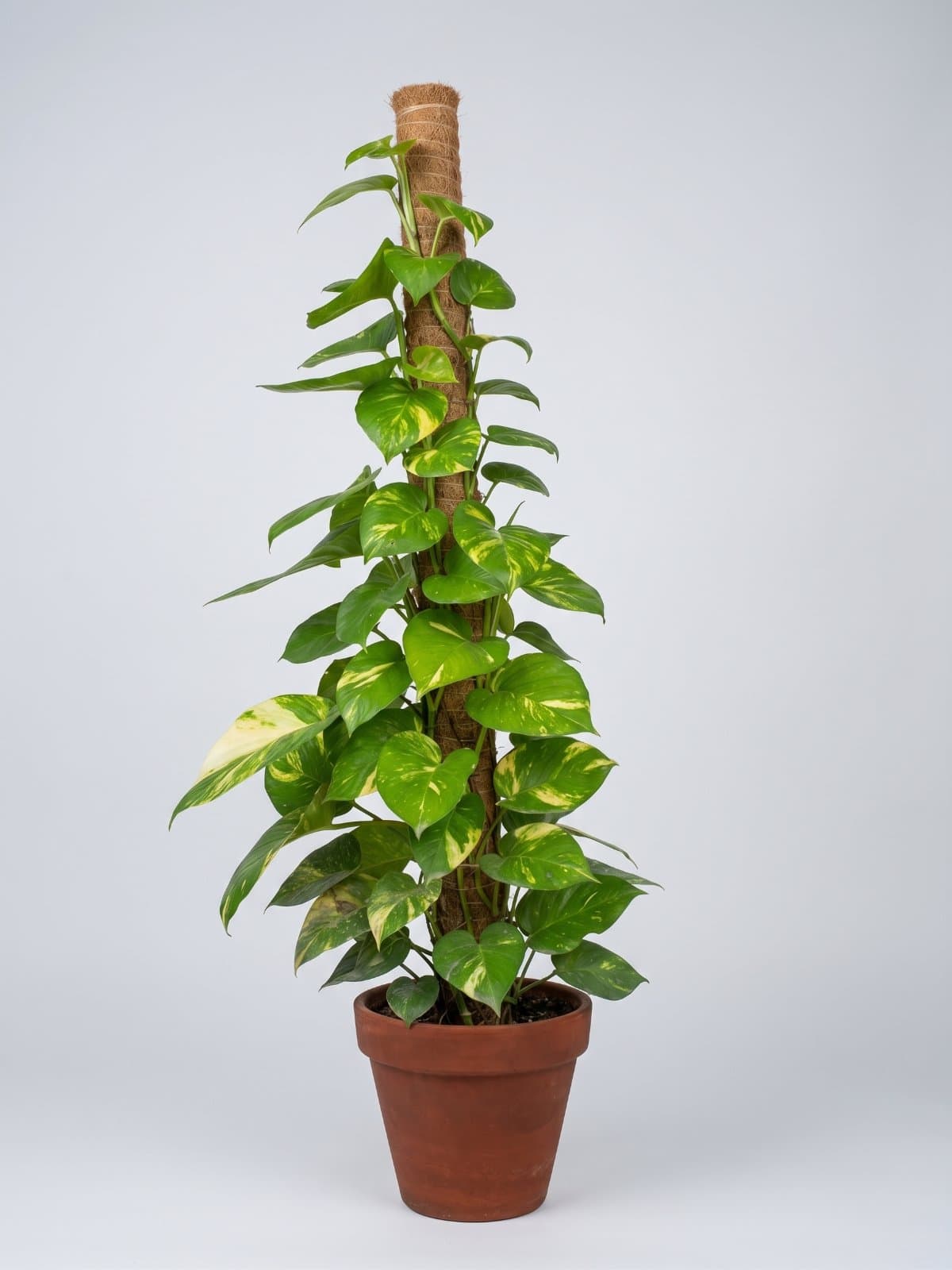
This confuses almost everyone, so here is the simple version. The classic Pakistani money plant is a pothos (Epipremnum aureum). A heartleaf philodendron looks similar, but its leaves are thinner, softer and a deeper matte green, coming to a longer point, and each new leaf pushes out of a papery sheath that then dries and falls off — pothos has no such sheath, and its leaves are thicker, often flecked with gold, with a grooved leaf-stalk. Care-wise they are close, but the philodendron copes with lower light a little better and likes slightly steadier moisture. If you want the easy lookalike we almost always have in stock, the money plant is the one to start with; our full money plant & pothos care guide goes deeper.
Climbing on a moss pole, or left to trail
A philodendron will happily do either. Left in a hanging basket or on a high shelf, the trailing types tumble down in long leafy strands. Give one a moss pole or a mossy stake to climb, though, and it changes character — the stems grip the support with little aerial roots and the new leaves come out noticeably larger, the way the plant grows up tree trunks in the wild. Keep the moss pole lightly damp to encourage those roots to take hold. The upright self-heading types do not climb; they simply grow into a broad, bushy plant and only need a bigger pot as they fill out.
Easy propagation from a stem cutting
This is where the philodendron wins friends — it is one of the simplest plants to multiply, and free. Cut a healthy stem just below a node (the little bump where a leaf meets the stem), keeping a couple of leaves on top, and stand it in a glass of clean water on a bright windowsill. Change the water every few days and roots appear in about two to three weeks; once they are an inch or two long, pot the cutting into ordinary potting soil and keep it lightly moist while it settles. You can just as easily push the cutting straight into damp soil. This is also the cure for a leggy, bare-stemmed plant: take cuttings from the tips and replant them into the same pot to make it full and bushy again.
Feeding, humidity and Lahore’s dry winter
Through the warm growing months, spring into early autumn, feed once a month with a balanced liquid houseplant fertiliser at half the label strength; stop in the cold months when the plant is resting. Philodendrons come from humid jungles, so our dry Lahore winter air — made worse by heaters — can leave the leaf tips brown and crispy. Group your plants together, stand the pot on a tray of pebbles with a little water below its base, or mist the leaves on the driest days to lift the humidity. Wipe the broad leaves with a damp cloth now and then; clean leaves breathe and shine, and you catch pests early. For the wider routine, see our indoor plant care guide.
Common problems, and a note on pets and children
Most trouble traces back to watering or light. Yellowing lower leaves point to overwatering or a pot with no drainage; brown, crispy tips point to dry air or underwatering; long gaps between small, pale leaves (“leggy” growth) mean the plant wants more light — move it somewhere brighter and take tip cuttings to refill the pot. Watch for sap-sucking pests in dry weather, and wipe them off with soapy water.
A safety word: every philodendron is toxic if chewed or eaten. The leaves and stems carry insoluble calcium oxalate crystals that cause burning and swelling of the mouth, tongue and lips, heavy drooling, vomiting and difficulty swallowing in cats, dogs and small children. It is not usually life-threatening, but it genuinely hurts. Keep the plant up on a high shelf or in a hanging basket, out of reach of pets and toddlers, and rinse the mouth with water and call your vet or doctor if any is swallowed. If you would rather have a completely pet-safe corner plant, our best indoor plants for beginners guide lists safer options.
Common questions
Will a philodendron survive a Lahore summer indoors?
Yes, easily — indoors it is very comfortable through our summer, as long as it is out of direct window sun and watered a little more often in the heat. It is the winter dry air, not the summer, that it minds most, so mist it or set it on a pebble tray on the driest days.
Is a philodendron the same as a money plant?
No. The Pakistani “money plant” is a pothos; a philodendron is a close cousin with thinner, softer, deeper-green leaves and a papery sheath on each new leaf. Their care is similar, but the philodendron handles low light a touch better. If you would rather have the money plant, we usually keep it in stock.
Is philodendron poisonous to cats and dogs?
Yes. All parts are toxic if chewed, because of calcium oxalate crystals that cause a painful, burning, swollen mouth, drooling and vomiting. Keep it well out of reach of pets and children; if some is eaten, rinse the mouth and ring your vet or doctor.
How do I make a leggy philodendron bushy again?
Move it into brighter (indirect) light so new growth stays compact, then cut the long bare stems into pieces, root the tips in water, and replant them back into the same pot. In a couple of months it fills out and looks full again.
We do not always keep the philodendron at the farm, but if you would like one, message us on WhatsApp and we will try to arrange a healthy, well-rooted plant for you on order. If you want that same easy, leafy look right away, we almost always have its cousin the money plant in stock — a wonderful, forgiving first indoor plant. And if you love big, dramatic leaves, read our monstera care guide next.